
Leadership Knowledge Commons
Collaborative learning for leaders seeking more.
Collaborative
learning for leaders seeking more.
Read what is useful. Pause when you need to. Return when the work makes space again.

What the Commons Is
A place where continuous adult learning doesn't disappear.
Built from the Commons. Designed for your next meeting.
The Leadership Knowledge Commons is MCC's free learning space for education leaders working in real systems, with real constraints and real responsibility. We gather reflection, research-informed insight, field learning, leader voice, and practical tools to help meaningful work last.
Leaders are always learning from the work itself, through implementation dips, team conversations, data meetings, and hard decisions. Too often that learning stays invisible. It lives in one person's notes or one team's meeting, and it leaves when they do. The Commons exists to hold and share it, so leaders can pause, engage in deeper meaning making, make connections to their own experiences and stories, and grow in personal, professional ways. This space allows leaders to connect with larger patterns in leadership, adult learning, and implementation.
Free. New reflections and tools in your inbox.
The Entries
Find learning by what you are trying to strengthen.
Learning entries are written by other leaders who want to share their story, knowledge, and experiences with others. Each month has a theme and a weekly learning entry. Leaders can filter entries by the Five Pillars of Lasting Change.
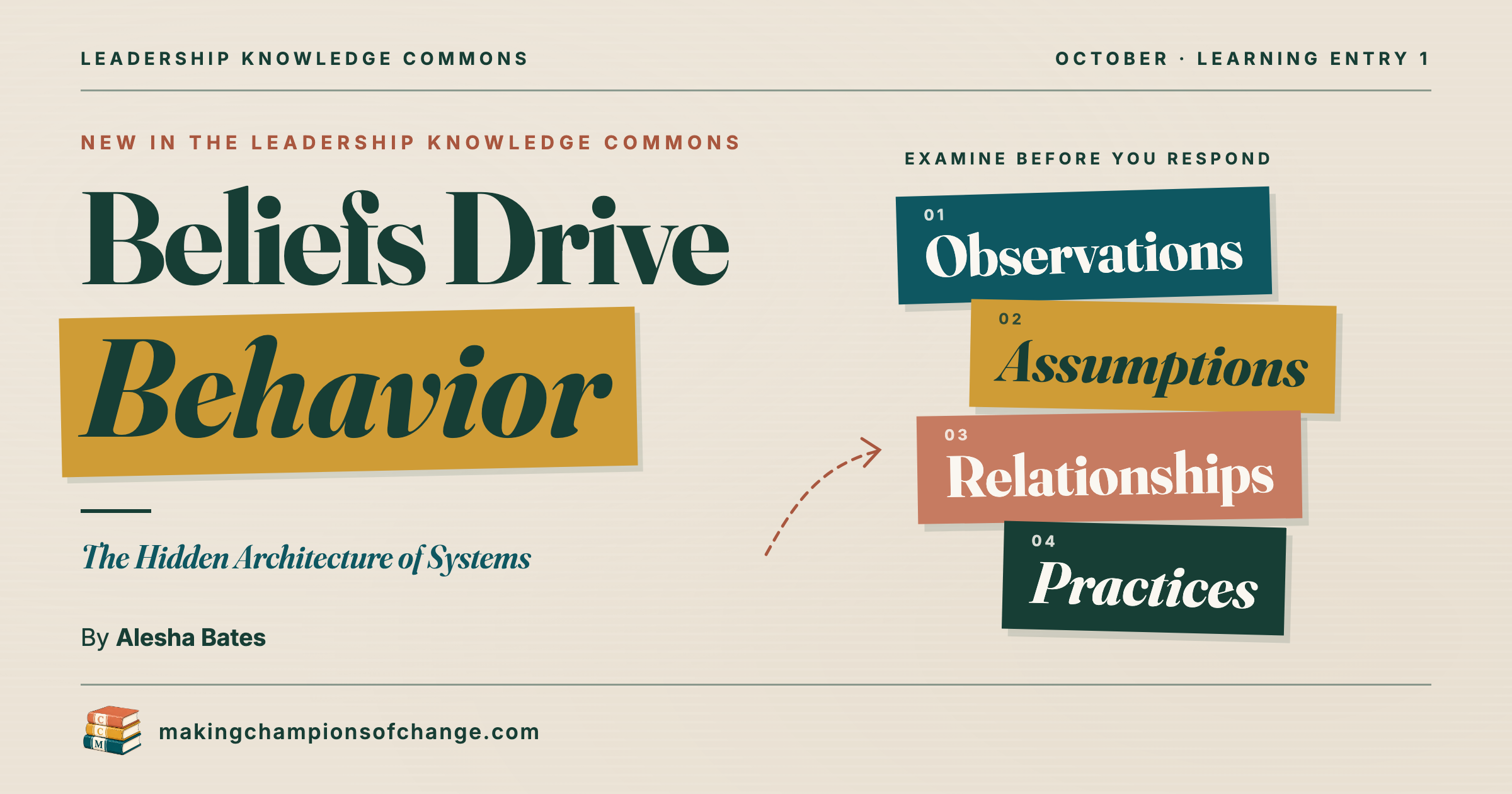
October 2026 Series, Beliefs Drive Behavior: Entry #1
Beliefs Drive Behavior -
The Hidden Architecture
of Systems
Beliefs shape how leaders interpret behavior, build relationships, and create opportunities for students and staff. By examining assumptions and adjusting practice, educators can create more responsive, trusting systems.
September 2026 Series, Culture Creates Outcomes: Entry #4
Sustaining Connection Through the Hard Middle of the Year
Sustainable change happens when shared purpose, ownership, and clear routines become part of the system rather than depending on one leader. Distributing responsibility and building feedback loops help meaningful practices last through change.
September 2026 Series, Culture Creates Outcomes: Entry #3
Listening as a Leadership Strategy
Listening helps leaders understand what dashboards alone cannot reveal about how people experience the system. By asking better questions, seeking different perspectives, and following through on feedback, leaders can strengthen trust and make more informed decisions.
September 2026 Series, Culture Creates Outcomes: Entry #2
What Adult Wellness Means in a Real School Year
Adult wellness improves when leaders design systems that protect people’s capacity instead of continually adding more. Clear priorities, realistic workloads, strong connections, and practical support help educators sustain meaningful work.
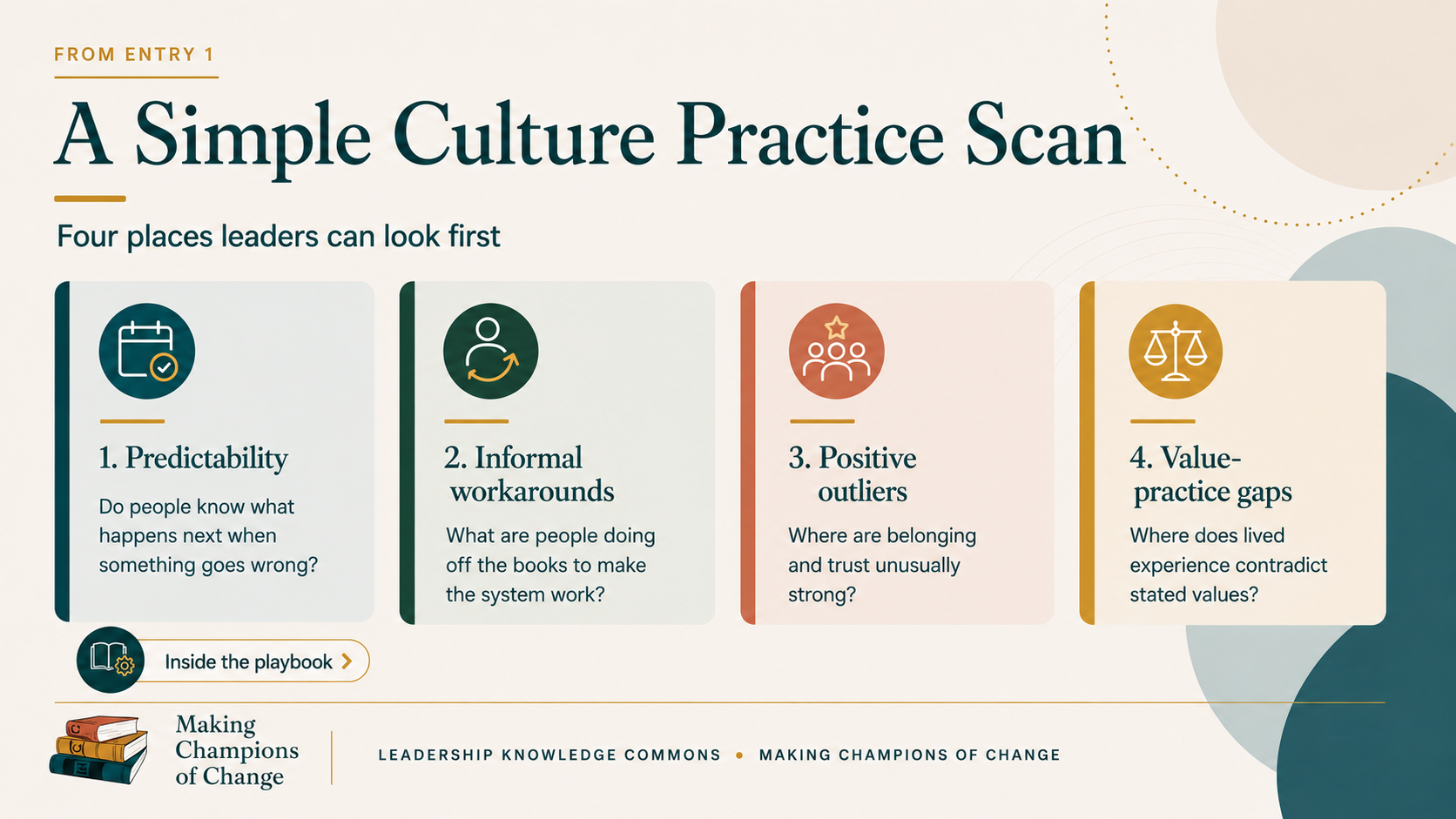
September 2026 Series, Culture Creates Outcomes: Entry #1
Culture Creates Outcomes
Culture is built through everyday routines, interactions, and decisions that show people what a school truly values. By examining predictability, workarounds, and gaps between stated values and lived experiences, leaders can create stronger trust, belonging, and alignment.
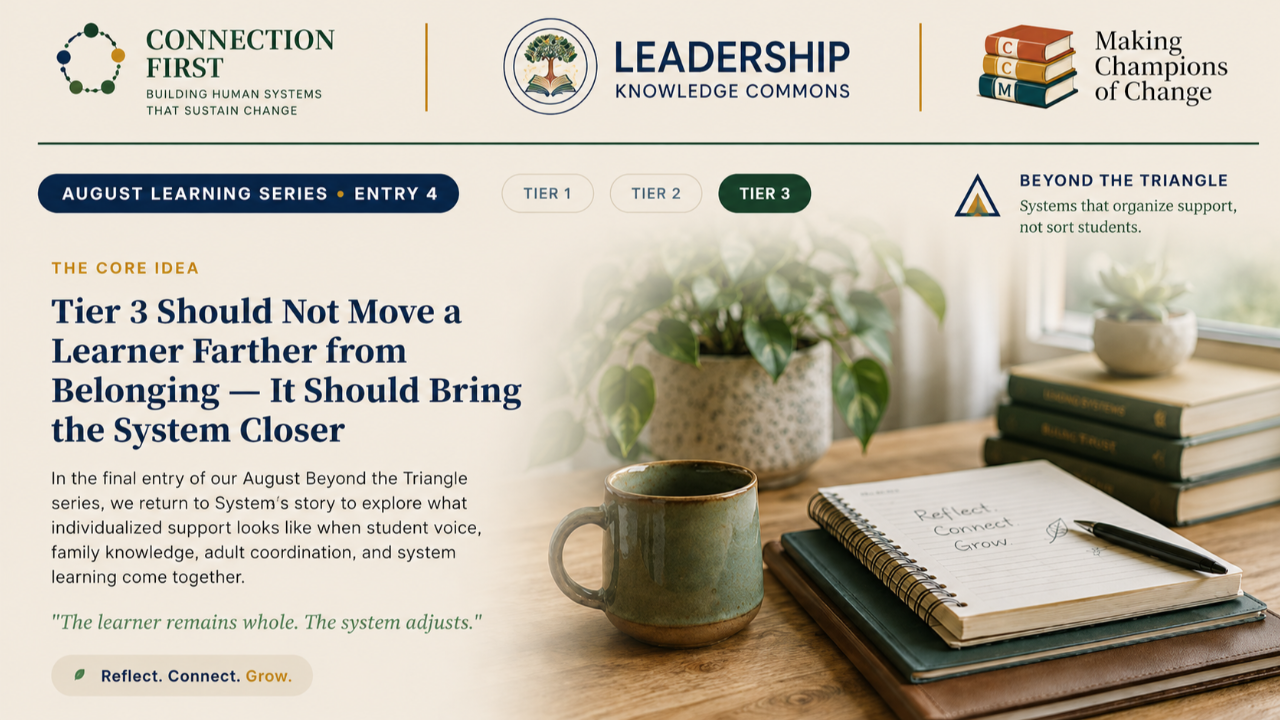
August 2026 Series, Beyond the Triangle: Entry #4 - Tier 3
Individualized support that brings the system closer together
Tier 3 support is most effective when it is designed with learners and families, using their experiences to create precise, individualized responses without sacrificing belonging. A coherent MTSS allows learning to move across all tiers so individualized insights can strengthen supports for the entire system.
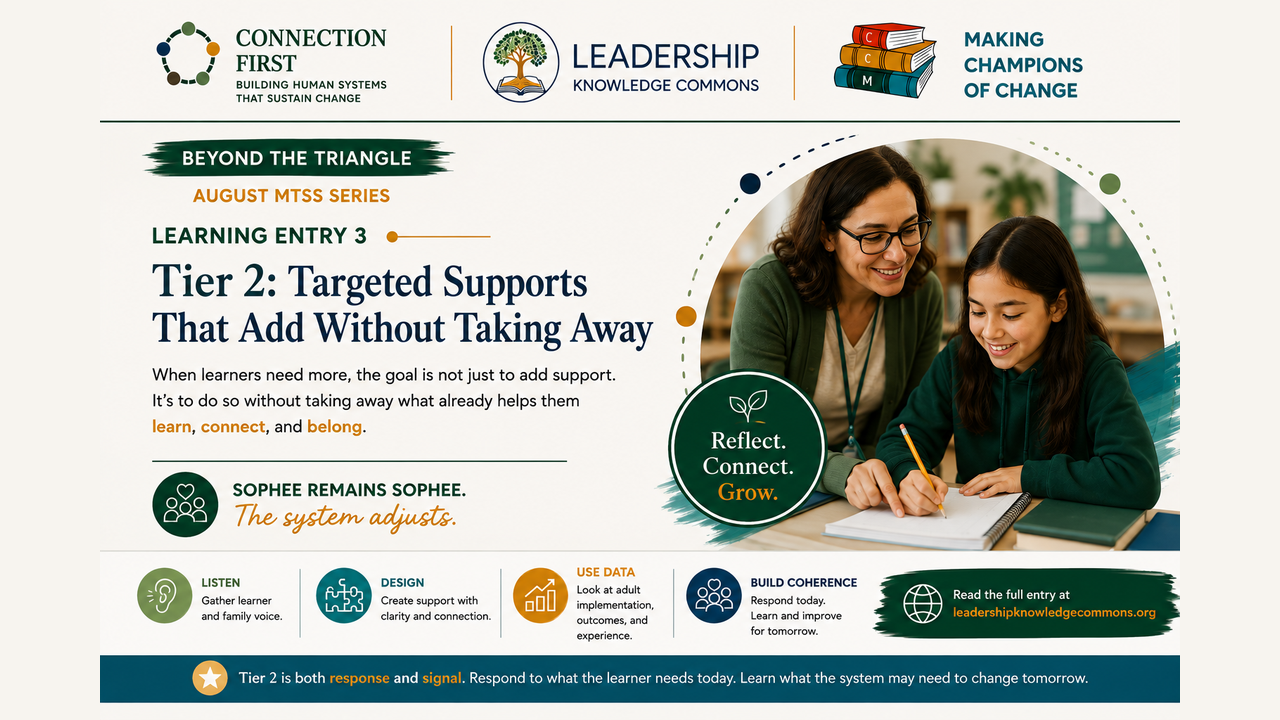
August 2026 Learning Series, Beyond the Triangle: Entry #3 - Tier 2
Culture Creates Outcomes
Tier 2 support should add what a learner needs without taking away the relationships, routines, and experiences that already help them belong and succeed. By considering student and family perspectives alongside outcomes and adult implementation, leaders can design targeted supports that respond to individual needs while strengthening the larger system.
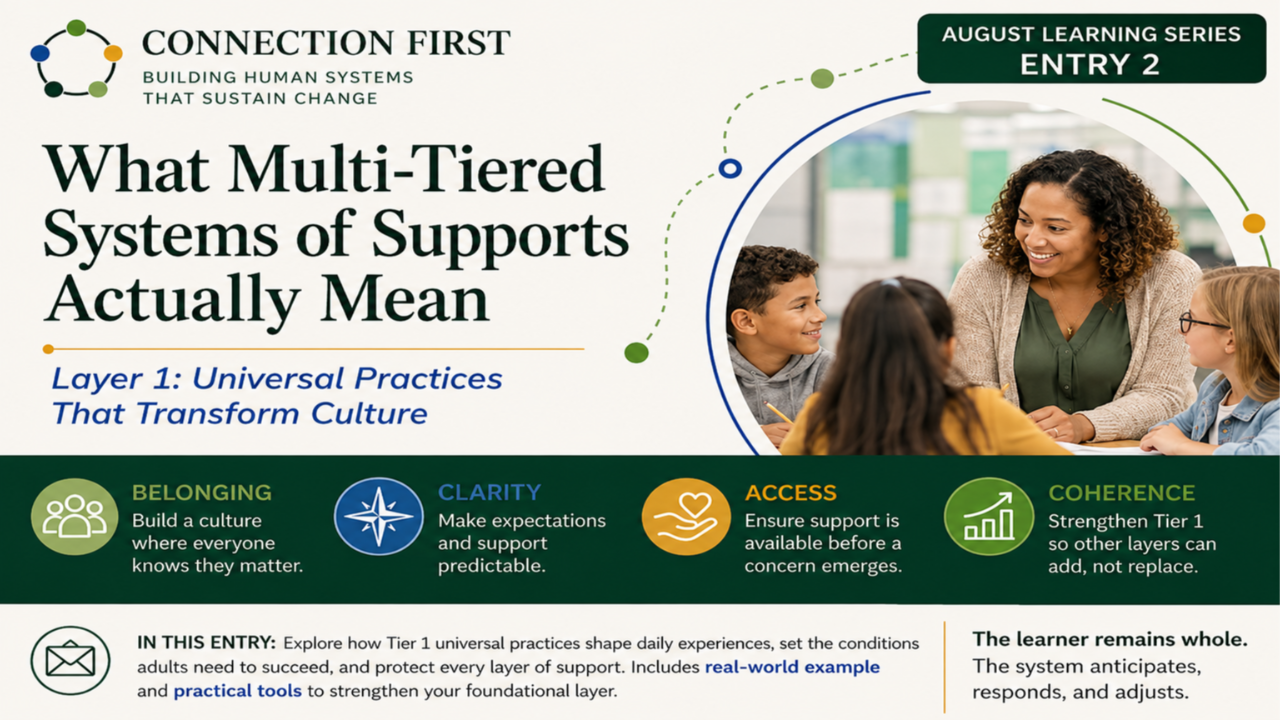
August 2026 Learning Series, Beyond the Triangle: Entry #2 - Tier 1
The Culture Every Student Feels First
Tier 1 is the predictable, relational foundation students experience every day, where clear expectations, consistent routines, and dependable support strengthen learning and belonging. When schools create a coherent universal experience, targeted and individualized supports can build on that foundation rather than compensate for gaps in the system.

August 2026 Learning Series, Beyond the Triangle: Entry #1
What Multi-Tiered Systems of Supports Actually Mean
MTSS is designed to organize responsive layers of support, not sort or label students into tiers. When universal, targeted, and individualized supports work together as one coherent system, schools can respond to learner variability while using each layer to strengthen the others.
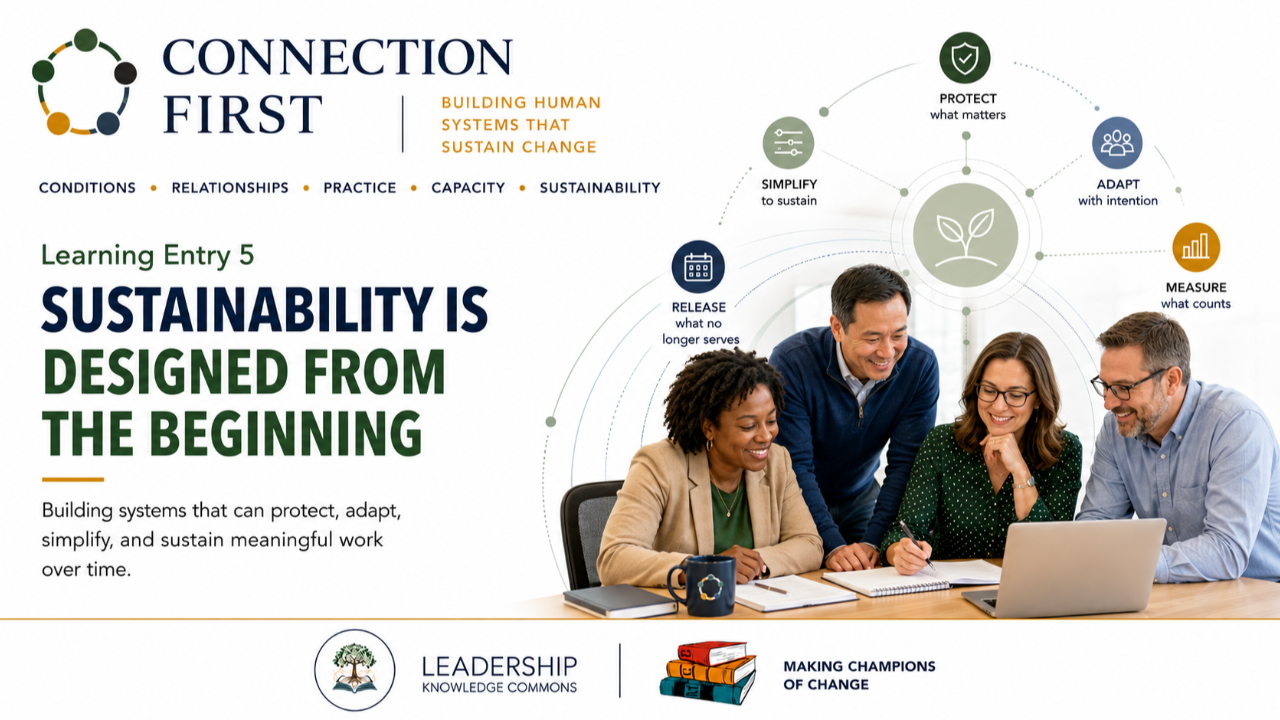
July Series 2026, Connection First: Entry #5
Sustainability Is Designed from the Beginning
Sustainability is designed from the beginning by building shared ownership, clear infrastructure, intentional adaptation, and meaningful measurement into everyday systems. When important work moves from being people-held to system-held, it can remain effective through leadership changes, shifting priorities, and evolving needs.
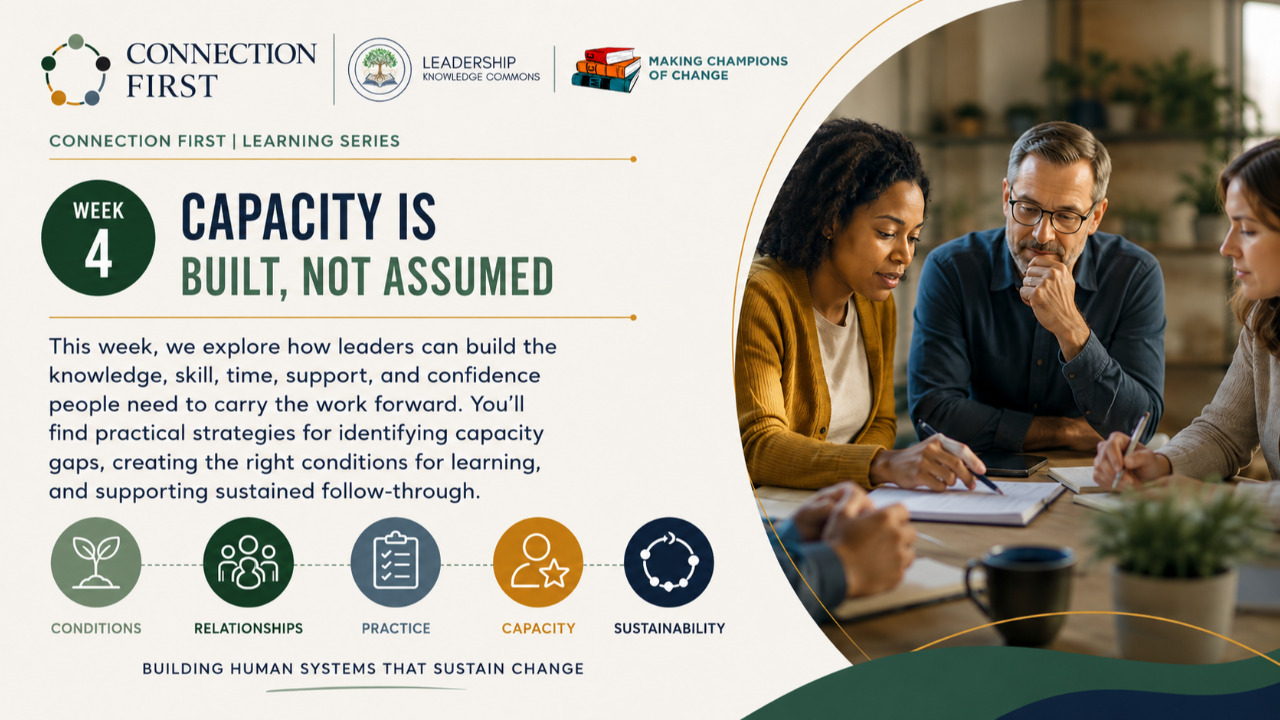
July Series 2026, Connection First: Entry #4
Capacity Is Built, Not Assumed
Capacity is built when leaders provide the knowledge, skills, time, support, confidence, and conditions people need to turn expectations into sustained practice. Instead of treating uneven follow-through as resistance, leaders can identify the real capacity gap and respond with the right combination of clarity, modeling, coaching, practice, and support.
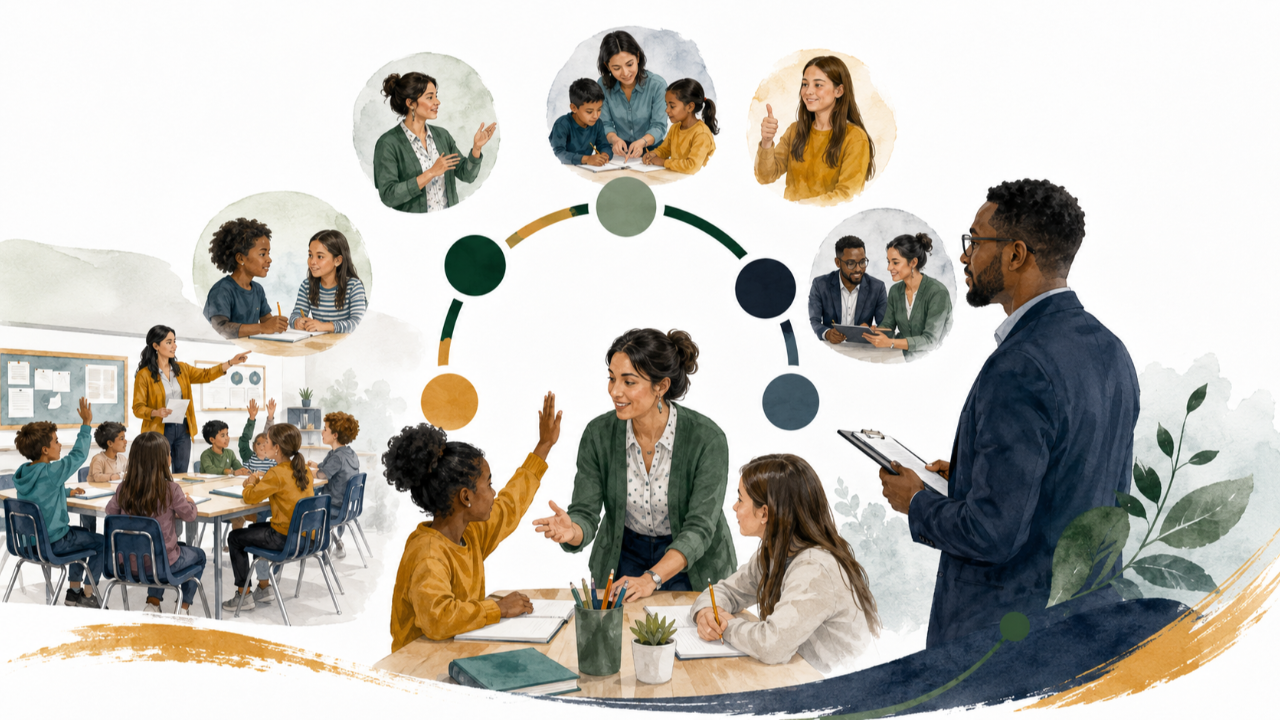
July 2026 Series, Connection First: Entry #3
Practice Makes Purpose Visible
Practice makes purpose visible by turning shared values into clear, teachable, and repeatable actions that people can understand, practice, and refine. Through modeling, feedback, coaching, and consistent support, leaders can reduce ambiguity and help meaningful practices become part of everyday routines.

July 2026 Series, Connection First: Entry #2
Relationships That Hold the Work
Strong relationships are essential infrastructure for implementation, helping teams navigate complexity through trust, communication, collaboration, repair, productive conflict, and shared ownership. When leaders strengthen these relational conditions, people are more likely to communicate honestly, address challenges together, and stay engaged when the work becomes difficult.

July 2026 Series, Connection First: Entry #1
Conditions Before Strategy
Capacity is built when leaders provide the knowledge, skills, time, support, confidence, and conditions people need to turn expectations into sustained practice. Instead of treating uneven follow-through as resistance, leaders can identify the real capacity gap and respond with the right combination of clarity, modeling, coaching, practice, and support.

June 2026 Series, The Human Side of Teacher Retention: Entry #4
The Learners in the Building: Honoring the Human Drive to Grow
Teacher retention is strengthened when schools honor educators as lifelong learners with interests, curiosity, and growth beyond their professional responsibilities. By protecting time and space for self-directed learning, leaders can support greater autonomy, renewal, engagement, and connection to the work.
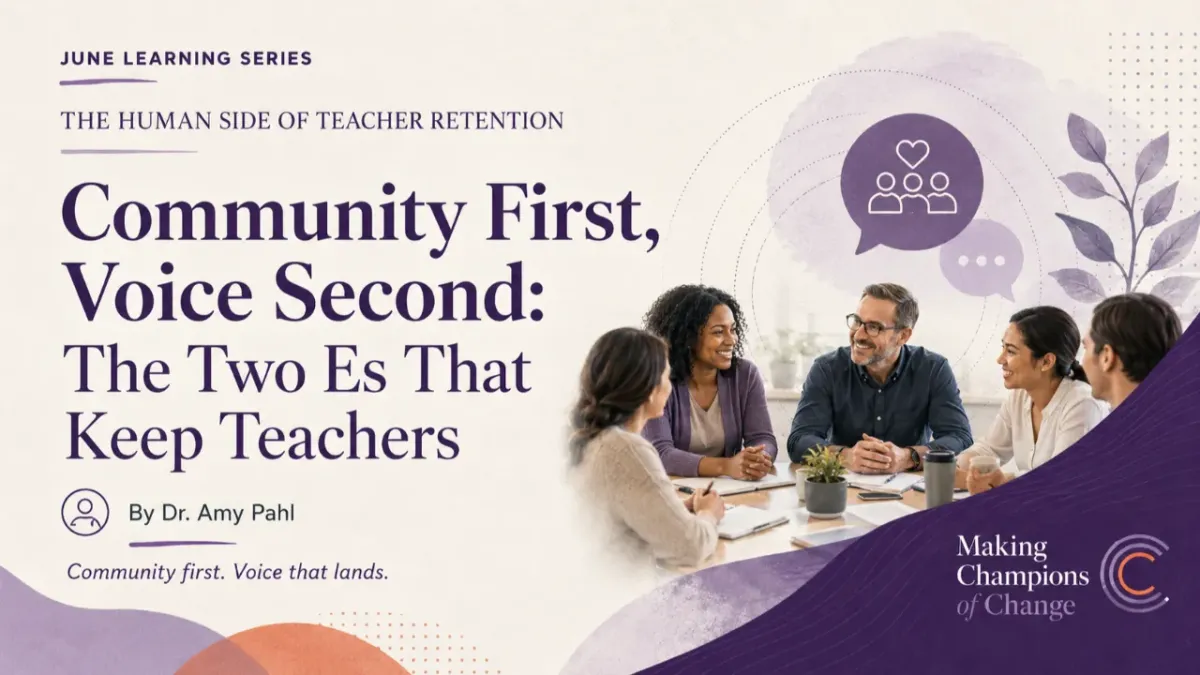
June 2026 Series, The Human Side of Teacher Retention: Entry #3
Community First, Voice Second
Teacher retention grows when schools build community before asking for voice, creating meaningful opportunities for connection and belonging. When leaders make teacher input genuinely influential and visibly connect feedback to decisions, participation becomes a foundation for trust, ownership, and lasting engagement.
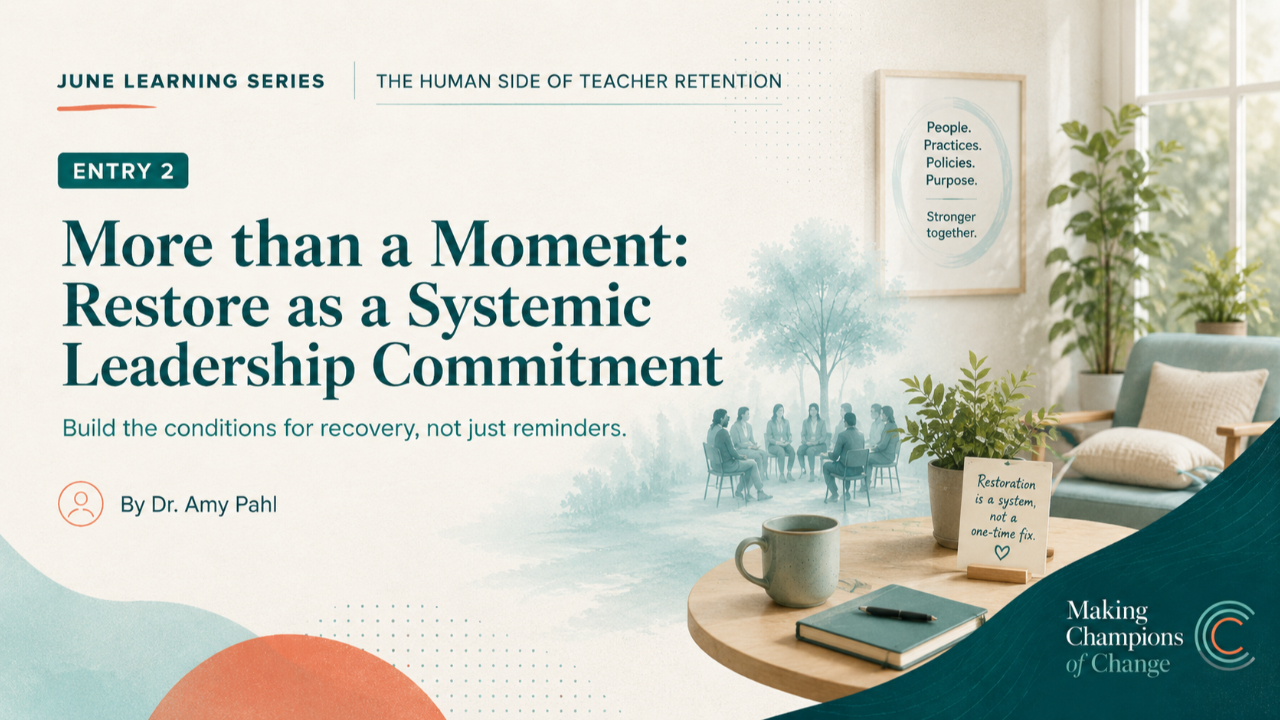
June 2026 Series, The Human Side of Teacher Retention: Entry #2
Restore as a Systemic Leadership Commitment
Teacher restoration should be treated as a systemic leadership responsibility, not an individual wellness task. By embedding protected time, accessible resources, supportive environments, and human-centered leadership into everyday school structures, leaders can help educators sustain their energy, wellbeing, and commitment to the work.

June 2026 Series, The Human Side of Teacher Retention: Entry #1
The Hidden Cost of Teacher Turnover
Teacher retention improves when leaders treat turnover as a system design challenge rather than an inevitable staffing problem. Supporting job satisfaction, working conditions, and adult culture can help schools retain educators and build stronger communities.
May 2026 Series, The Work Between Us: Entry #4
Collaboration as Belonging Practice
Collaboration becomes stronger when belonging, psychological safety, voice, and repair are intentionally built into the way teams work together. By creating spaces where people can participate honestly, navigate tension, and remain valued through challenges, leaders can strengthen trust and sustain meaningful collaboration.
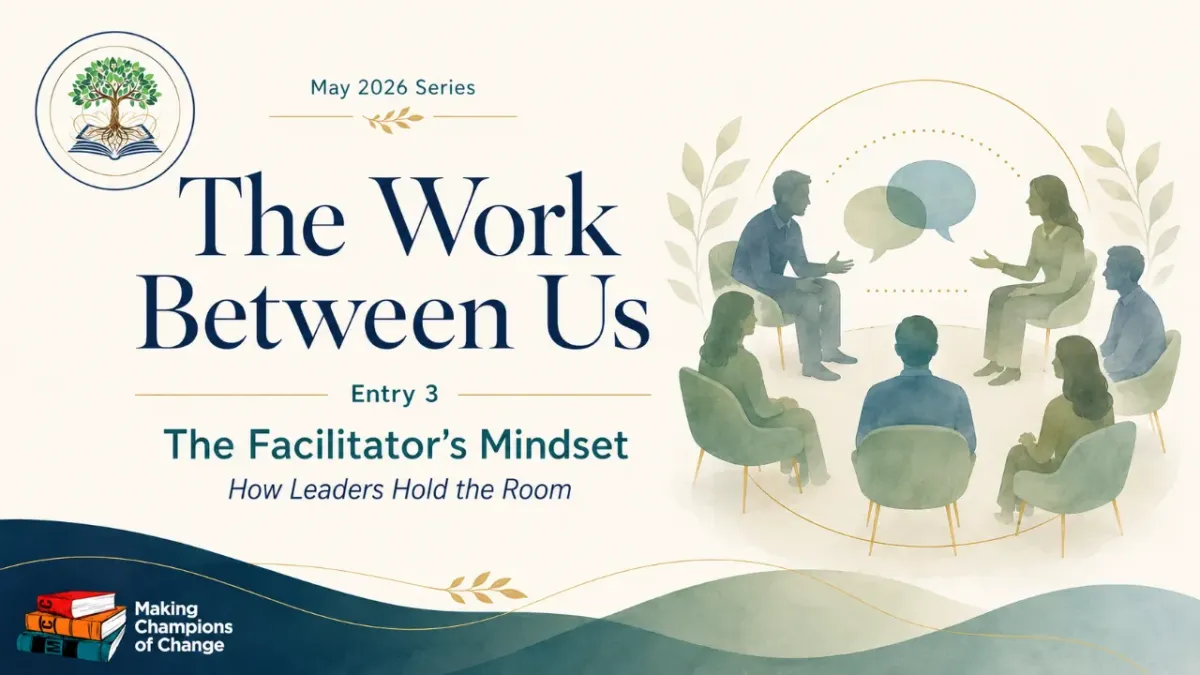
May 2026 Series, The Work Between Us: Entry #3
The Facilitator's Mindset
Effective facilitation begins with listening as an active leadership practice that shapes trust, power, and whose voices are heard. When leaders listen with curiosity, restraint, and a willingness to let input influence what happens next, collaboration becomes a space for honest dialogue, shared understanding, and meaningful participation.
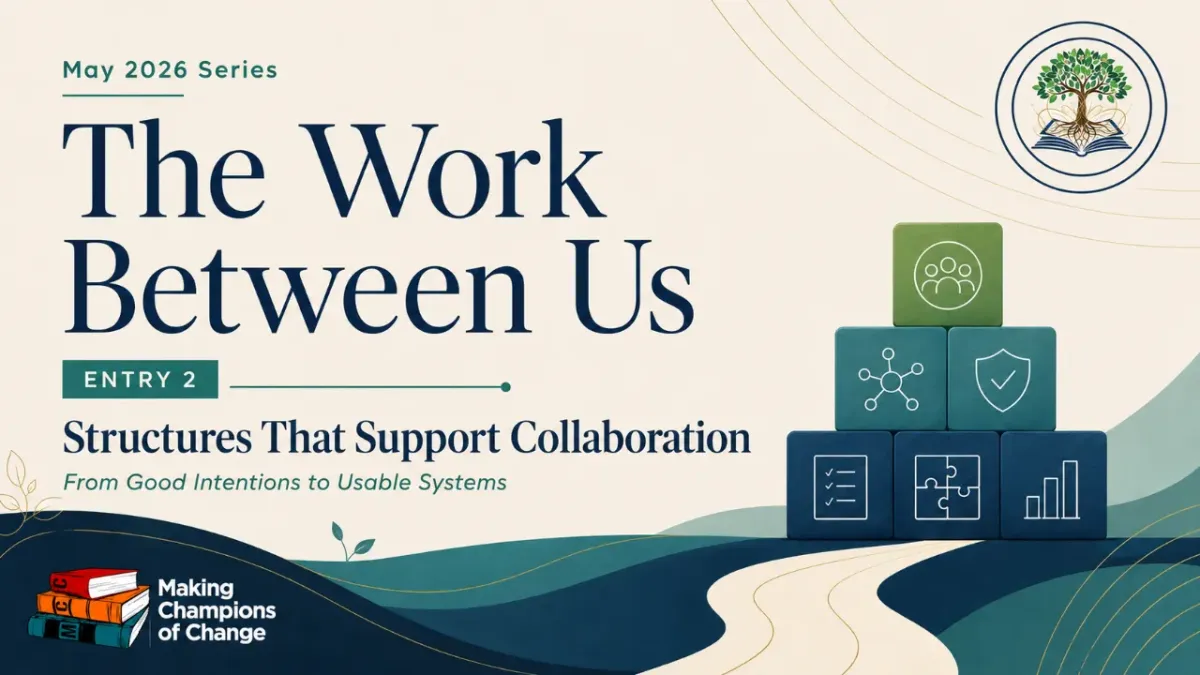
May 2026 Series, The Work Between Us: Entry #2
Structures That Support Collaboration
Strong collaboration depends on clear, intentional structures that reduce confusion, protect time, and make shared work easier to carry. When teams have predictable routines, defined roles, and visible feedback loops, they can strengthen trust, belonging, collective efficacy, and meaningful follow-through.
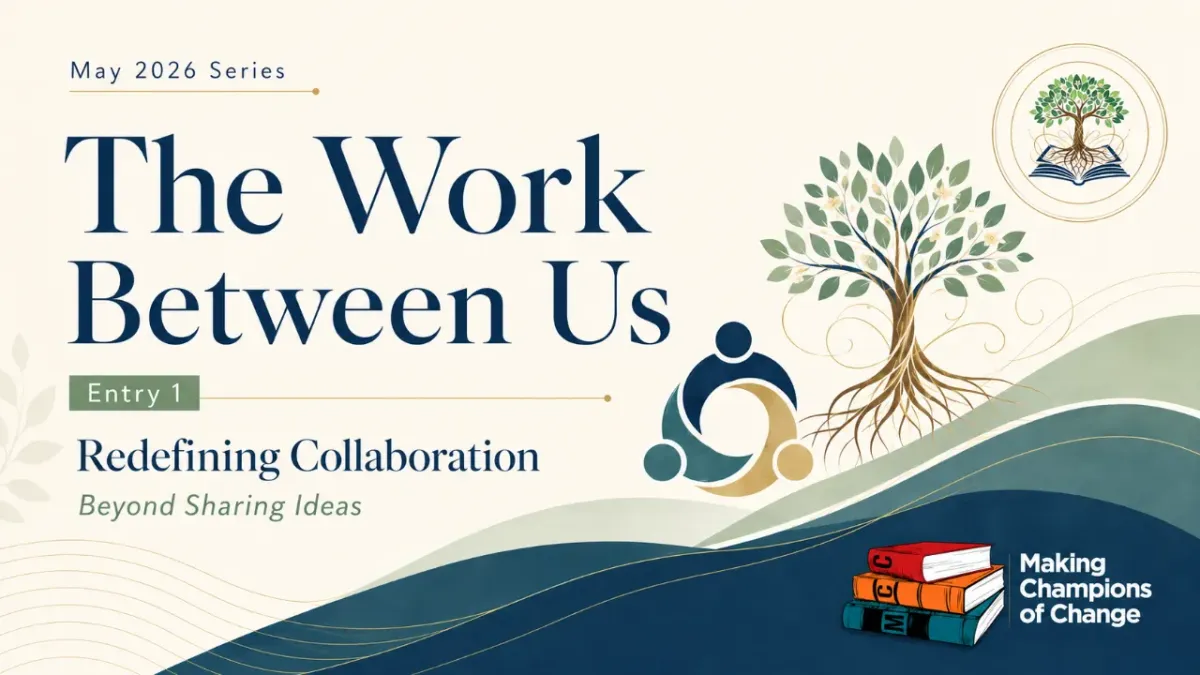
May 2026 Series, The Work Between Us: Entry #1
Redefining Collaboration
Collaboration goes beyond sharing ideas; it requires shared ownership, clear responsibility, and collective accountability for both the work and its impact. When leaders design structures that distribute responsibility and reduce hidden labor, teams can move from simply talking about the work to truly carrying it together.
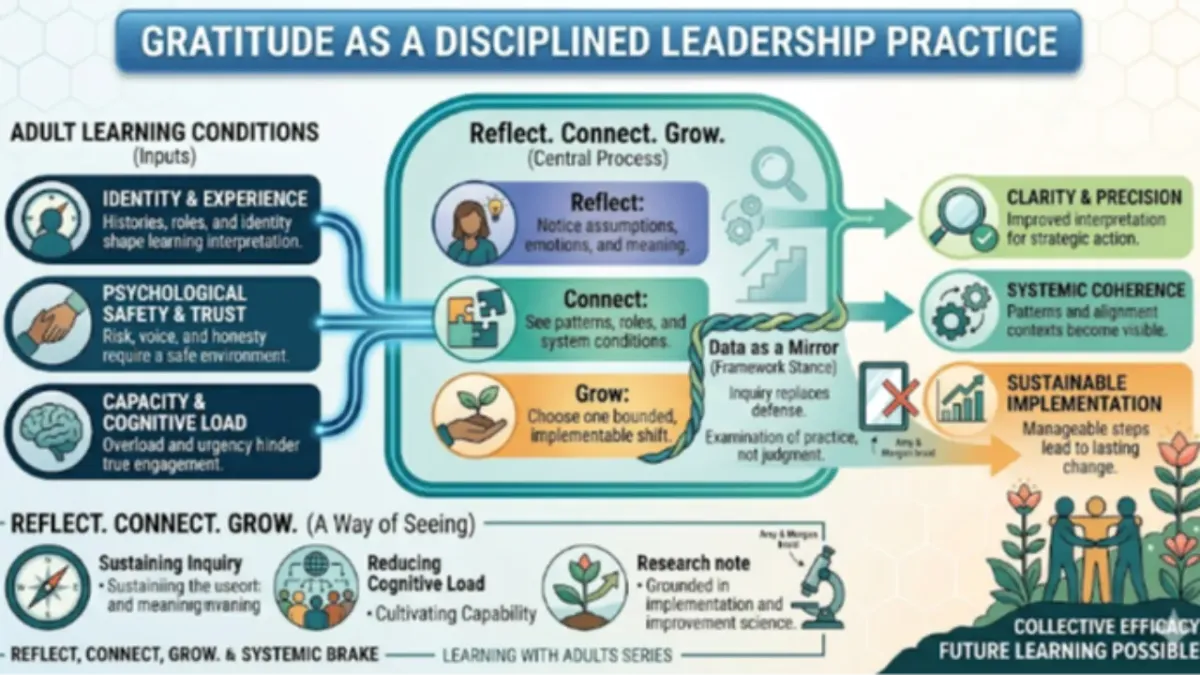
April 2026 Series, Learning With Adults: Dignity: Entry #5
Gratitude as a Leadership Skill
Gratitude is a leadership practice of intentionally noticing the effort, growth, courage, and often-invisible contributions that sustain adult learning. When embedded into everyday leadership, gratitude strengthens trust, psychological safety, collective efficacy, and the relational conditions people need to keep learning through challenge and change.
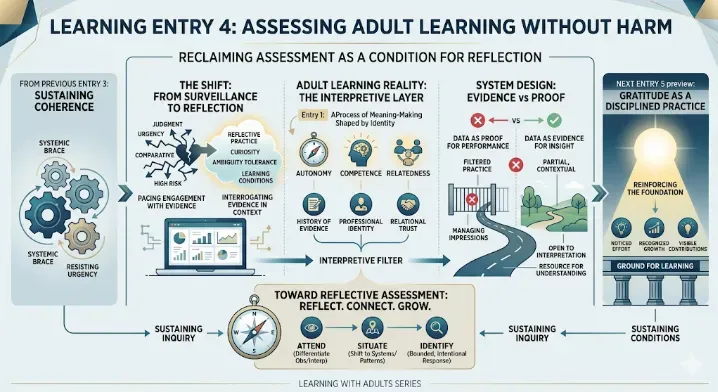
April 2026 Series, Learning With Adults: Dignity: Entry #4
Assessing Adult Learning Without Harm
Assessment supports adult learning when it is designed as a space for reflection and inquiry rather than judgment or surveillance. By protecting psychological safety, preserving agency, and allowing evidence to inform understanding before action, leaders can create conditions where adults engage honestly, examine their practice, and pursue meaningful growth.
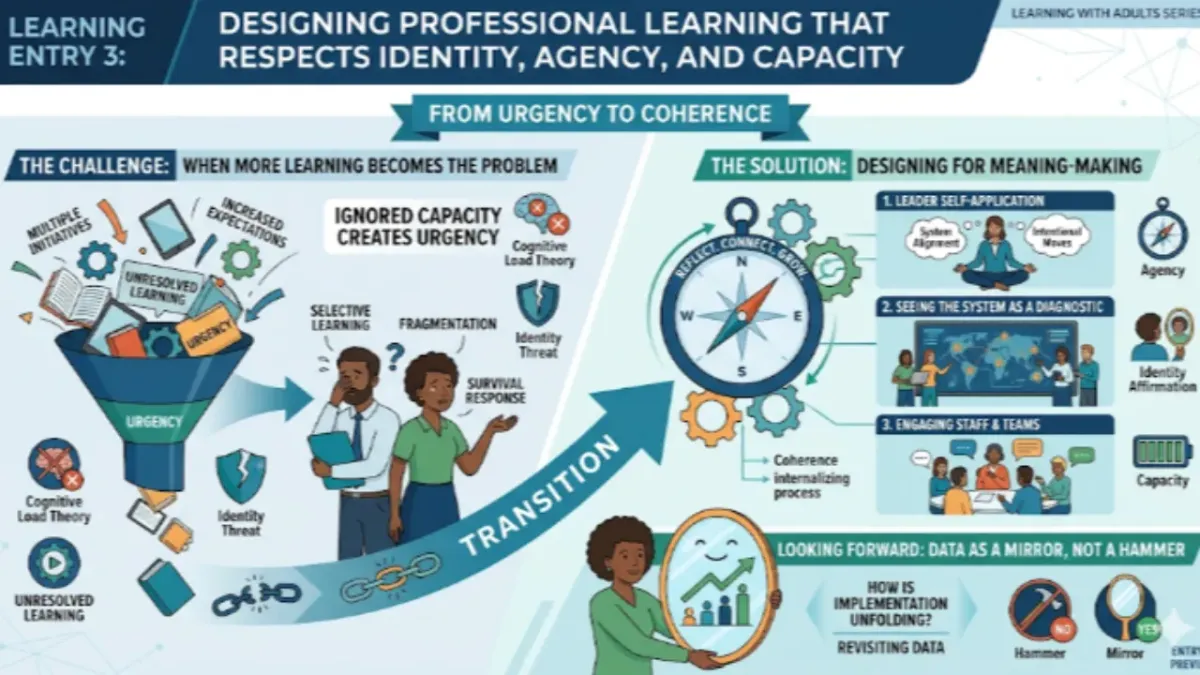
April 2026 Series, Learning With Adults: Dignity: Entry #3
Designing Professional Learning
Professional learning is most effective when it respects adult identity, agency, and capacity by prioritizing coherence over accumulation. By slowing the pace, reducing competing demands, and creating consistent opportunities to reflect, connect, and grow, leaders can help adults integrate learning into meaningful and sustainable practice.
April 2026 Series, Learning With Adults: Dignity: Entry #2
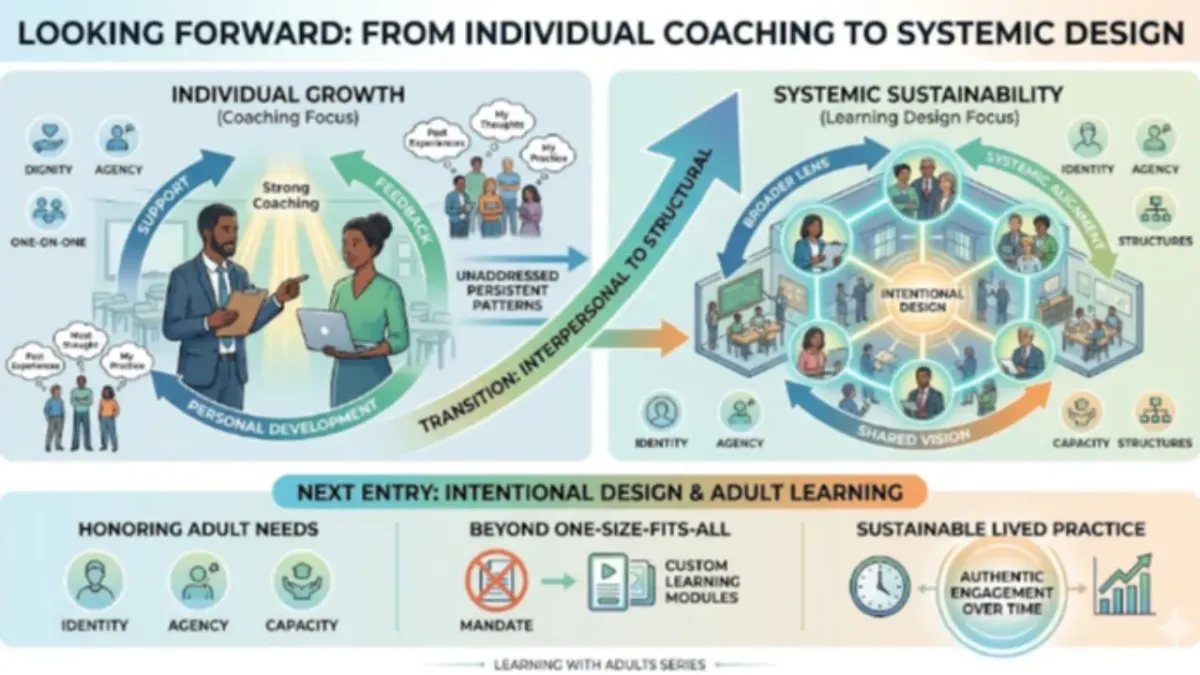
Coaching, Not Correcting
Effective coaching shifts from correction to partnership by protecting adult dignity, agency, and psychological safety. When educators have space to reflect, make meaning, and shape their own next steps, coaching becomes a catalyst for deeper learning, trust, and sustainable growth.
April 2026 Series, Learning With Adults: Dignity: Entry #1
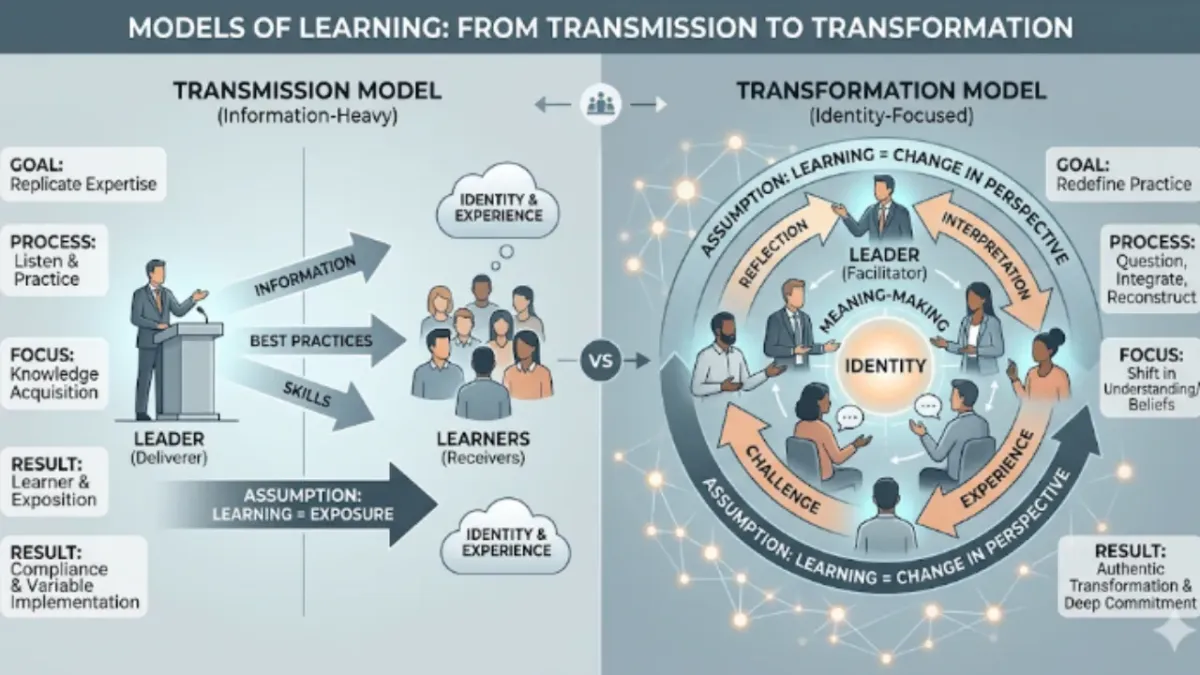
Why Adults Learn Differently
Adult learning is most effective when leaders recognize that learning is a process of meaning-making and identity transformation, not simply the transmission of information. By creating conditions that protect dignity, agency, psychological safety, and reflection, leaders can help adults move beyond compliance toward authentic engagement and lasting growth.

March 2026 Series, The Science of Doing: Entry #4
Measuring What Matters
Implementation data is most useful when fidelity is treated as a tool for curiosity and learning rather than judgment or compliance. By examining what was actually implemented and the conditions shaping consistency or variation, leaders can strengthen accountability, improve systems, and sustain meaningful progress over time.
March 2026 Series, The Science of Doing: Entry #3
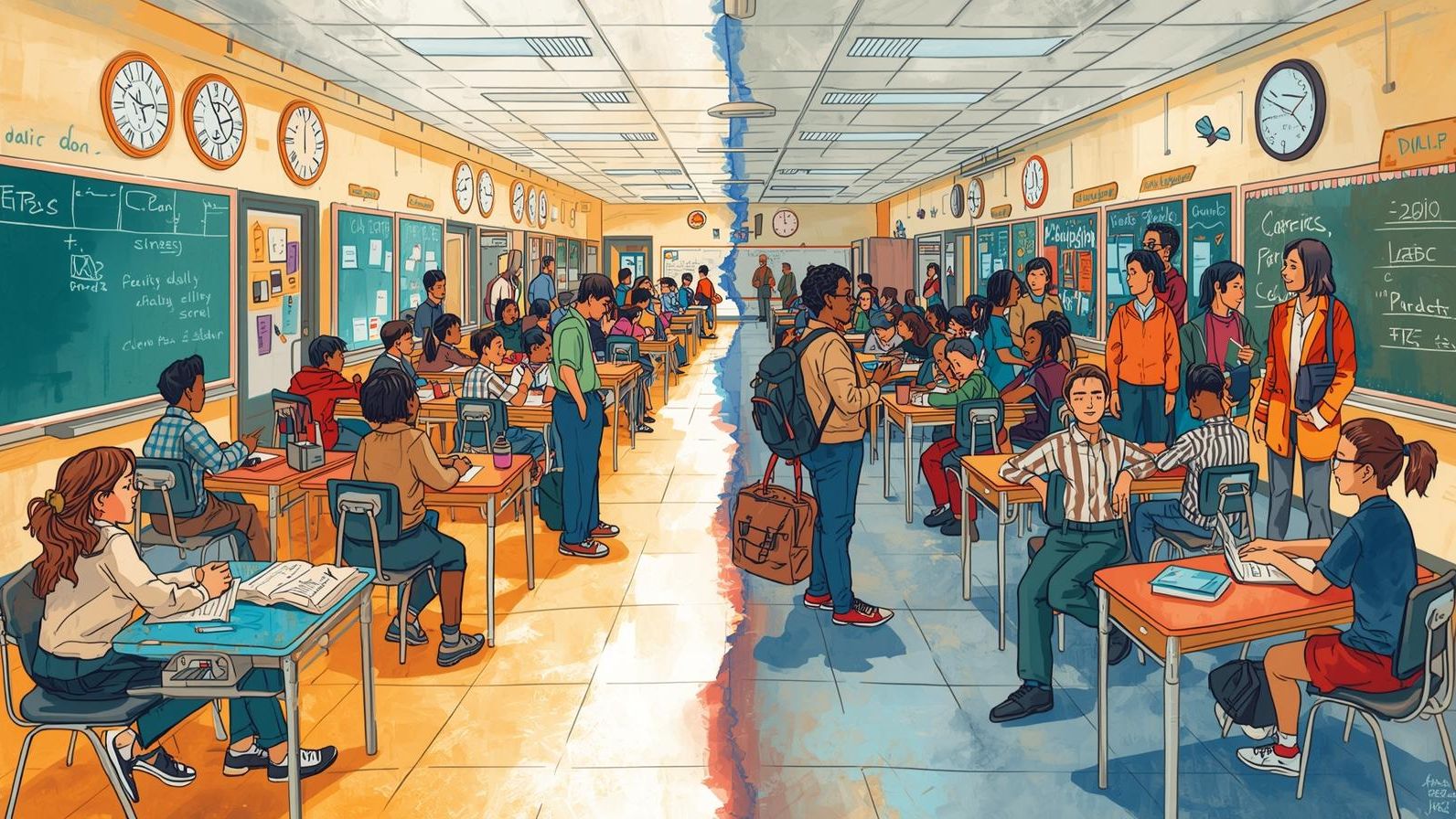
MTSS Teams as the Engine
MTSS teams serve as the engine of systems-level change by turning individual experiences into shared learning, coordinated action, and collective responsibility. When supported by clear communication pathways and responsive leadership, teams can identify patterns, surface barriers, and strengthen implementation across classrooms, roles, and levels of the system.

March 2026 Series, The Science of Doing: Entry #2
Coaching for Consistency
Coaching strengthens implementation when it turns uncertainty and variability into opportunities for clarification, learning, and greater consistency. By providing ongoing support, shared expectations, and space for thoughtful adaptation, leaders can help educators translate system intentions into sustainable practice without sacrificing trust or psychological safety.

March 2026 Series, The Science of Doing: Entry #1
Why Implementation Matters for Every Student
Implementation matters because students experience the quality of a system through the consistency, clarity, and support they encounter every day. By aligning people, resources, and supports with each stage of implementation, leaders can reduce variability, strengthen equity, and turn system intentions into sustainable student experiences.

February 2026 Series, Data as a Mirror: Entry #4
How Teams Learn to See the System
Data becomes a powerful mirror when teams use it to understand patterns, assumptions, and system conditions rather than judge performance. Consistent reflection and shared sense-making help teams turn data into meaningful improvement.

February 2026 Series, Data as a Mirror: Entry #3
Moving from Fear to Curiosity: Data Literacy for Every Educator
Data literacy grows when educators feel safe enough to approach data with curiosity instead of fear or judgment. Leaders can build that trust by modeling uncertainty, encouraging questions, and using data as a tool for learning.
February 2026 Series, Data as a Mirror: Entry #2
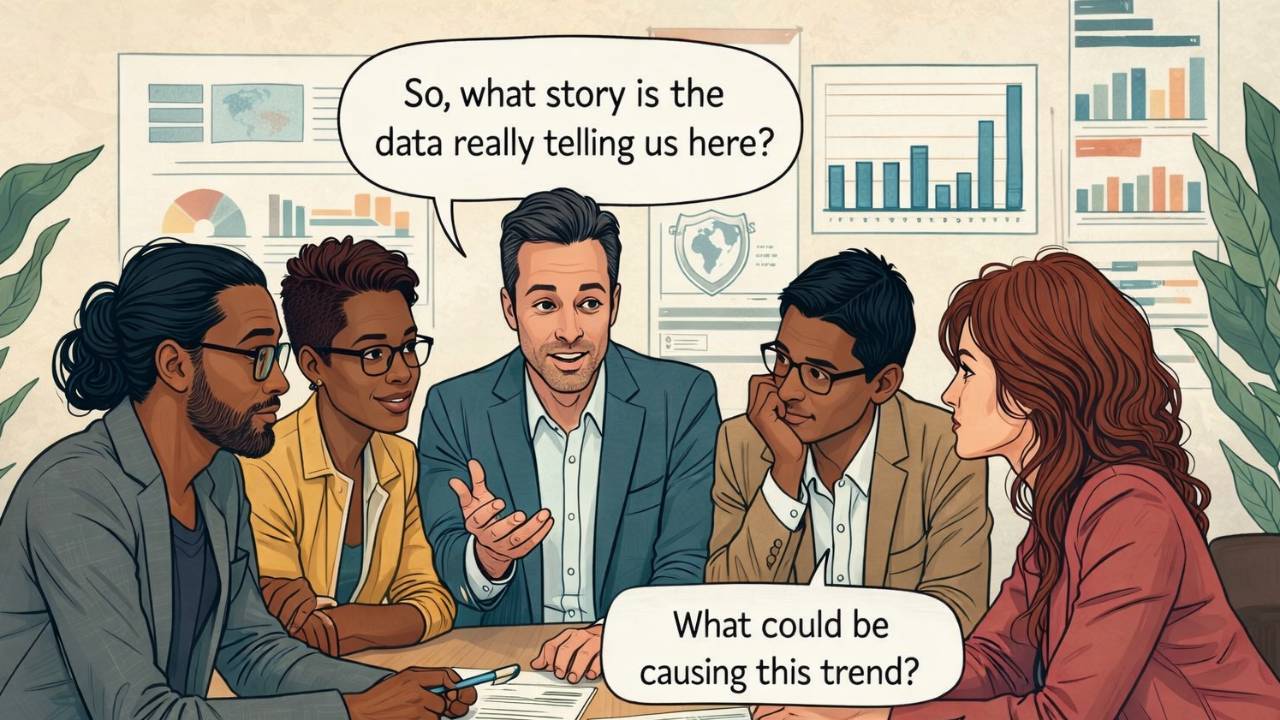
The Leader’s Role: Asking Better Questions
Leaders strengthen data conversations when they use thoughtful questions to create shared meaning rather than rushing to provide answers or assign solutions. By modeling curiosity, protecting psychological safety, and challenging assumptions, leaders can turn data into a tool for collective learning, equity, and intentional improvement.

February 2026 Series, Data as a Mirror: Entry #1
What Counts as Data?
Data becomes more meaningful when leaders look beyond numbers to include stories, observations, behaviors, relationships, and context. By considering multiple forms of evidence, teams can better understand student experiences and make more informed decisions.
January 2026 Series, Teaming That Holds: Entry #5
Linking Teams
Strong teams create lasting momentum when they are intentionally connected through clear purpose, defined responsibilities, and reliable feedback loops. By designing for coherence rather than adding more meetings or structures, leaders can reduce fragmentation, protect people’s capacity, and help teams turn isolated moments of success into sustained system-wide improvement.
January 2026 Series, Teaming That Holds: Entry #4
Refining Practice Together
Strong teams continue to grow when norms, routines, and agreements evolve alongside the people and work they are designed to support. By regularly reflecting on what is working, naming friction, and making intentional adjustments together, teams can protect trust, reduce unnecessary strain, and strengthen their collective practice.
January 2026 Series, Teaming That Holds: Entry #3
Psychological Safety
Psychological safety is built through small, consistent actions that make it safe for team members to speak honestly, question assumptions, admit uncertainty, and engage in productive disagreement. By combining clear expectations with curiosity, trust, and thoughtful responses to interpersonal risk, leaders can create teams where belonging is practiced daily and people can navigate complex work together.
January 2026 Series, Teaming That Holds: Entry #2
Purpose, Roles, and Routines
Clarity functions as a form of equity by reducing the cognitive and emotional labor people carry when purpose, roles, and routines are left unclear. When leaders create shared purpose, defined responsibilities, predictable meeting structures, and reliable communication routines, teams can protect voice, strengthen decision-making, and focus their energy on the work that matters.

January 2026 Series, Teaming That Holds: Entry #1
Building Functioning Teams
Teams become truly effective when clarity of purpose, psychological safety, collective efficacy, and shared ways of thinking are intentionally built into everyday practice. By creating supportive structures for roles, meetings, decision-making, and reflection, leaders can help teams move beyond simply meeting together to sharing responsibility and navigating complex change with confidence.

December 2025 Series, A Catalyst’s Reflection: Entry #3
What This Year Taught Me About Grit, Grace, and Growth
Leadership growth deepens when grit becomes centeredness, grace creates space for humanity, and honest reflection reconnects people to purpose. By aligning purpose, people, and practice, leaders can navigate demanding seasons with greater clarity, strengthen meaningful connections, and create growth that extends beyond simply doing more.
December 2025 Series, Returning to Purpose: Entry #2
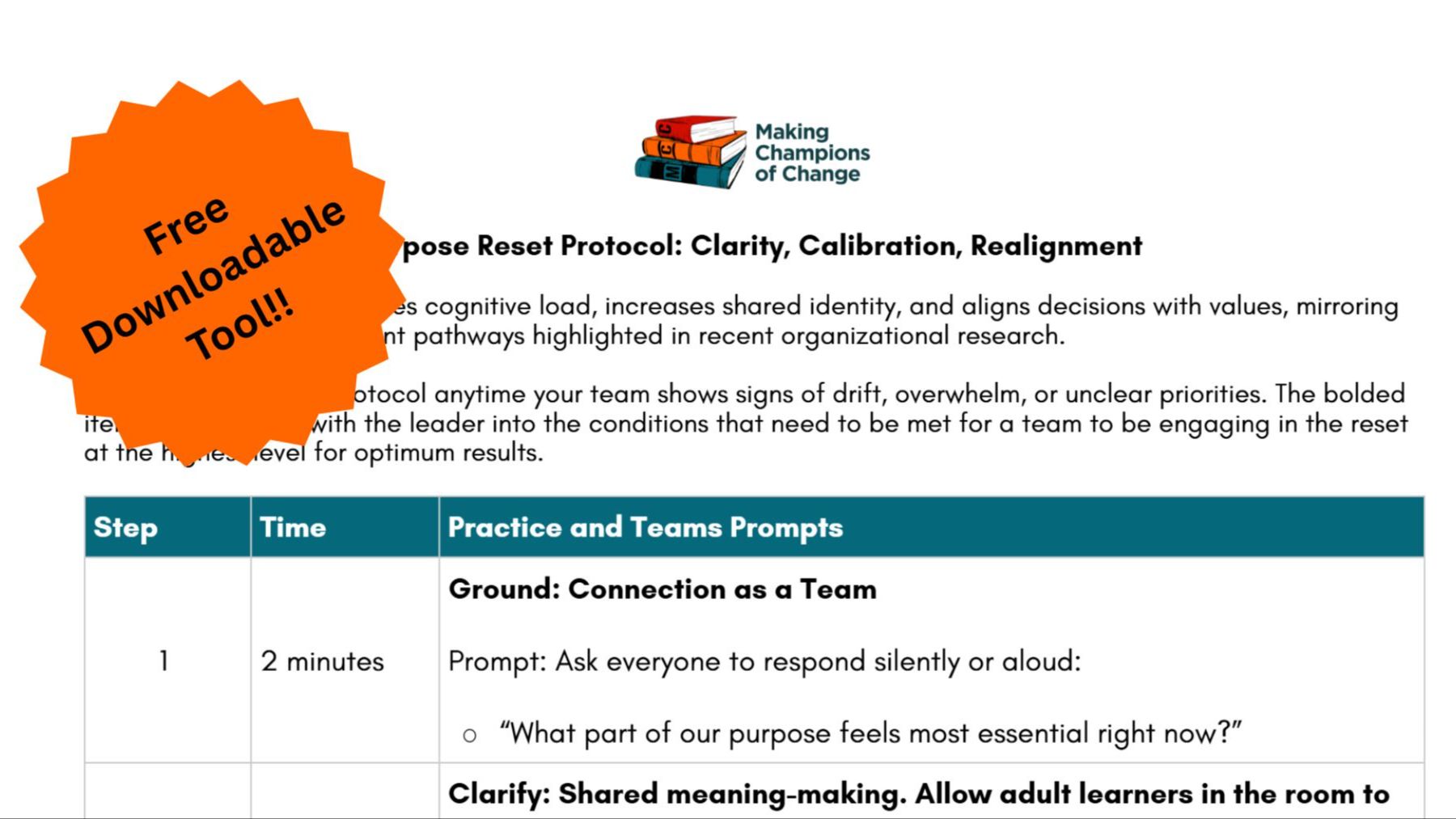
Sustaining Yourself and Your Team Through Change
Purpose serves as a stabilizing force that helps teams maintain clarity, connection, and commitment during periods of complex change. By consistently reconnecting decisions and actions to shared values, leaders can reduce change fatigue, create coherence, and help teams move through challenges with greater meaning and collective purpose.

December 2025 Series, Courageous Pauses: Entry #1
What Leaders Do When the Path Isn’t Clear
Courageous leadership includes knowing when to slow down, listen deeply, and create space for reflection before moving into action. By intentionally pausing to understand the system, reconnect with purpose, and consider people’s readiness and capacity, leaders can strengthen trust, reduce unnecessary urgency, and make more thoughtful, sustainable decisions.

November 2025 Series, A Season of Gratitude and Renewal
A Season of Gratitude and Renewal
Gratitude and renewal remind leaders that sustainable change begins by centering people, honoring their contributions, and creating conditions where they feel seen, valued, and supported. By leading with curiosity, humility, and grace while making space for rest and reflection, educators can replenish their capacity and continue meaningful change together.

November 2025 Series, The Last Burst of Color
Leading with Humility, Trust, and Gratitude
Sustainable change grows when leaders recognize that readiness happens at different times and respond with humility, trust, and gratitude. Supporting people with clarity and psychological safety helps turn hesitation into meaningful engagement.

November 2025 Series, Hidden Stories Beneath the Surface
Leading with Grace, Gratitude, and Curiosity
Effective leadership begins with looking beneath resistance to understand the experiences, beliefs, and unmet needs shaping how people respond to change. By leading with grace, gratitude, and curiosity, leaders can replace assumptions with understanding, strengthen trust, and create more human-centered conditions for meaningful change.
October 2025 Series, Sharing the Human Experience
Building Psychological Safety and Trust Beyond the Technical Fix
Psychological safety grows when leaders address both problems and the human experiences behind them. Acknowledging emotions and repairing relationships strengthens trust, collaboration, and lasting change.

October 2025 Series, The Beauty Beneath the Surface
When Leadership Teams Take “Selfish” Time
Leadership teams strengthen entire systems when they intentionally invest time in reflection, alignment, capacity building, and shared understanding before pushing change forward. What may appear to be inward-focused work is often the foundation for greater coherence, stronger collaboration, and sustainable outcomes for educators and students.

October 2025 Series, Showing Up with Gratitude
Beyond the Celebrations
Gratitude becomes a powerful leadership practice when it extends beyond celebration to listening with humility, recognizing unseen effort, and honoring the courage it takes to voice challenges. By responding with curiosity, empathy, and meaningful action, leaders can strengthen psychological safety, deepen trust, and create a culture where people feel valued as partners in shared growth.

June 2025 Series, Non-Exclusionary Practices
Building Inclusive and Restorative School Communities
Non-exclusionary discipline creates stronger school communities when behavior support centers belonging, relationships, accountability, and growth rather than punishment. Restorative and inclusive practices help students repair harm, stay connected, and learn from their choices.

June 2025 Series, Kids Deserve the Best We Can Give
Building Capacity in One Another
Students thrive when educators continuously build their own capacity through reflection, collaboration, coaching, and shared learning. By investing in trust, collective expertise, and transformative professional growth, schools can strengthen adult practice and create more inclusive, responsive environments where every student has the opportunity to succeed.
June 2025 Series, Clarity in Change
A Template for Communicating Shifts in School Protocols
Clear communication makes change easier when staff understand why the shift matters, what is expected, and how they will be supported. Consistent messaging, practical resources, and follow-up help reduce confusion and strengthen implementation.

June 2025 Series, Leading with Critical Consciousness
Leading with Critical Consciousness
Critical consciousness strengthens educational leadership when awareness of inequity leads to intentional reflection, courageous action, and meaningful systemic change. By examining biases, elevating marginalized voices, questioning existing structures, and leading with humility, educators can create more equitable and responsive schools for every learner.

May 2025 Series, Empowerment Theory in Educational Leadership
Empowerment Theory in Educational Leadership
Empowerment strengthens educational leadership when educators are given meaningful voice, autonomy, and shared ownership in decisions that shape their work and communities. By building trust, encouraging collaboration, and creating opportunities for reflection and innovation, leaders can develop empowered teams that drive professional growth and sustainable student success.

May 2025 Series, Rethinking Climate and Culture in Adult Learning Environments
Rethinking Climate and Culture in Adult Learning Environments
Strong adult learning environments value educator voice, collaboration, and diverse learning needs. Intentional leadership creates cultures where educators feel supported and empowered to grow.
April 2025 Series, Remembering Our Why
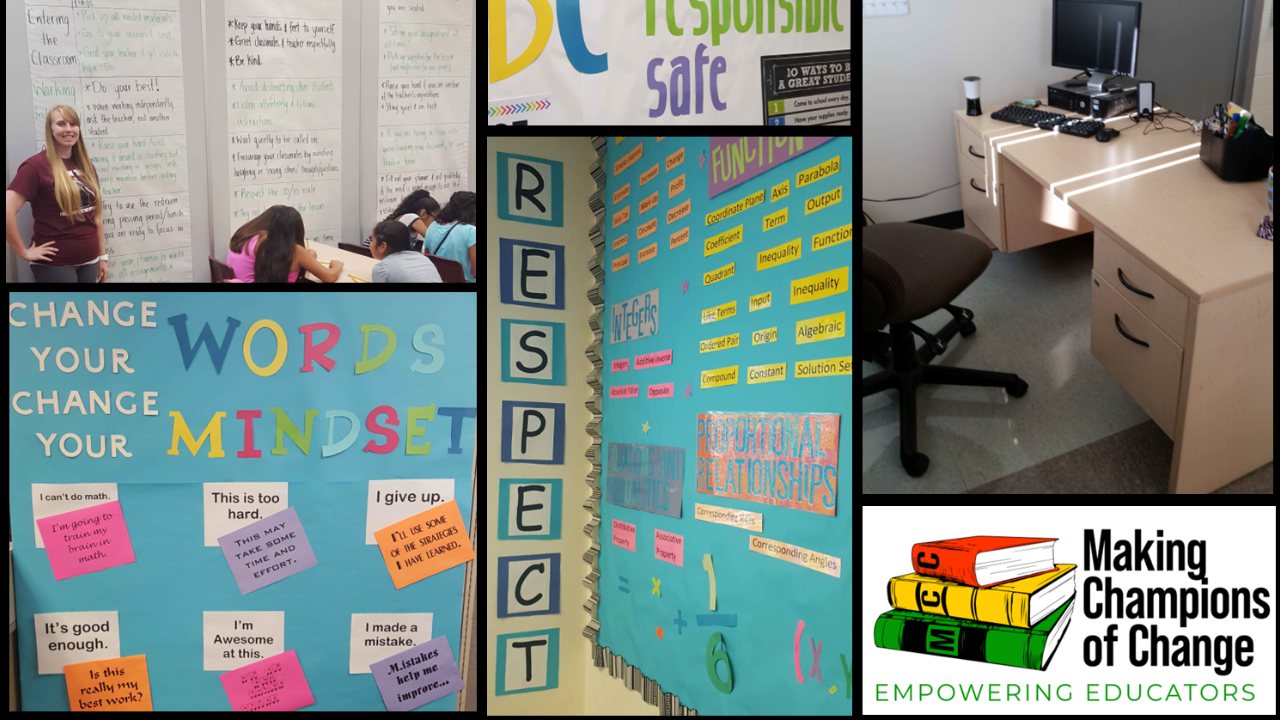
Remembering Our Why
Remembering your why keeps the purpose behind educational leadership and change at the center. By continuing to learn, adapt, and respond to student needs, educators can create more inclusive and equitable experiences for every learner.

April 2025 Series, High-Impact Relationship-Building Strategies
Building a Classroom Where Everyone Belongs
Strong classroom relationships are built through consistent actions that help students feel known, valued, respected, and capable of success. By listening actively, celebrating diversity, communicating belief, and creating safe and welcoming routines, educators can strengthen trust, belonging, and student engagement.
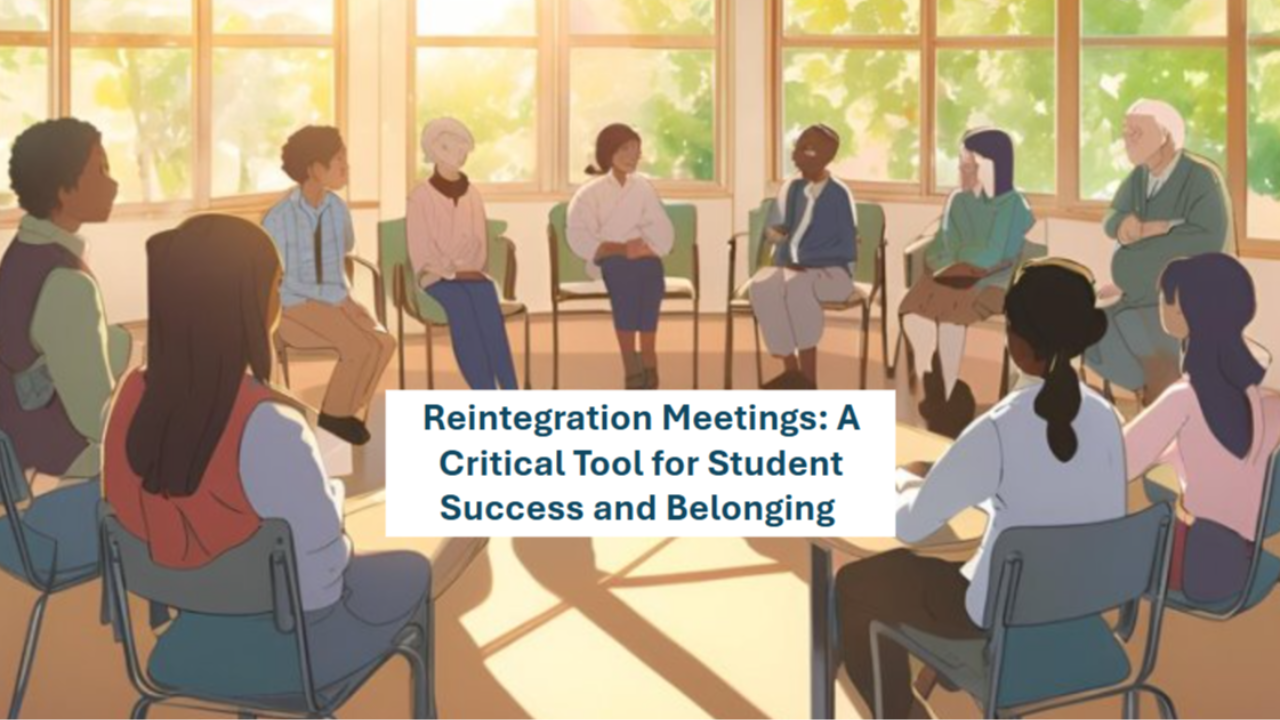
April 2025 Series, Reintegration Meetings
A Critical Tool for Student Success and Belonging
Reintegration meetings support student success by creating a structured path back to belonging, accountability, and connection after disciplinary absences. By bringing students, families, and school staff together to repair relationships, identify supports, and establish shared expectations, schools can reduce repeat discipline and create more equitable, restorative communities.

Join the Commons
Stay in the conversation.
Get new reflections, tools, and field learning from the Leadership Knowledge Commons. Practical insight for leaders working to sustain meaningful change.
No pressure to keep up perfectly. The Commons will be here whenever the work makes space.
Ready to go further?
When your team is ready to move real work forward, MCC partners directly with you. From a needs assessment that shows you where to start, to a Professional Learning Network, to the Leadership Laboratory, our deepest partnership, there's an entry point wherever your work is. Every partnership runs on Reflect. Connect. Grow. and strengthens the Five Pillars of Lasting Change, so the work fits your system and holds up after we step back.
Join the Commons
Free. New reflections and tools in your inbox.

A leadership and implementation ecosystem helping education leaders turn good ideas into change that lasts.
Explore
Learn with us
Opportunities
Stay in the Conversation
Get new playbooks, leadership tools, and district stories in your inbox.
© 2026 Making Champions of Change. All rights reserved.