

Leadership Knowledge Commons
Collaborative learning for leaders seeking more.
Collaborative
learning for leaders seeking more.
Read what is useful. Pause when you need to. Return when the work makes space again.

What the Commons Is
A place where continuous adult learning doesn't disappear.
Built from the Commons. Designed for your next meeting.
The Leadership Knowledge Commons is MCC's free learning space for education leaders working in real systems, with real constraints and real responsibility. We gather reflection, research-informed insight, field learning, leader voice, and practical tools to help meaningful work last.
Leaders are always learning from the work itself, through implementation dips, team conversations, data meetings, and hard decisions. Too often that learning stays invisible. It lives in one person's notes or one team's meeting, and it leaves when they do. The Commons exists to hold and share it, so leaders can pause, engage in deeper meaning making, make connections to their own experiences and stories, and grow in personal, professional ways. This space allows leaders to connect with larger patterns in leadership, adult learning, and implementation.
Free. New reflections and tools in your inbox.
The Entries
Find learning by what you are trying to strengthen.
Learning entries are written by other leaders who want to share their story, knowledge, and experiences with others. Each month has a theme and a weekly learning entry. Leaders can filter entries by the Five Pillars of Lasting Change.
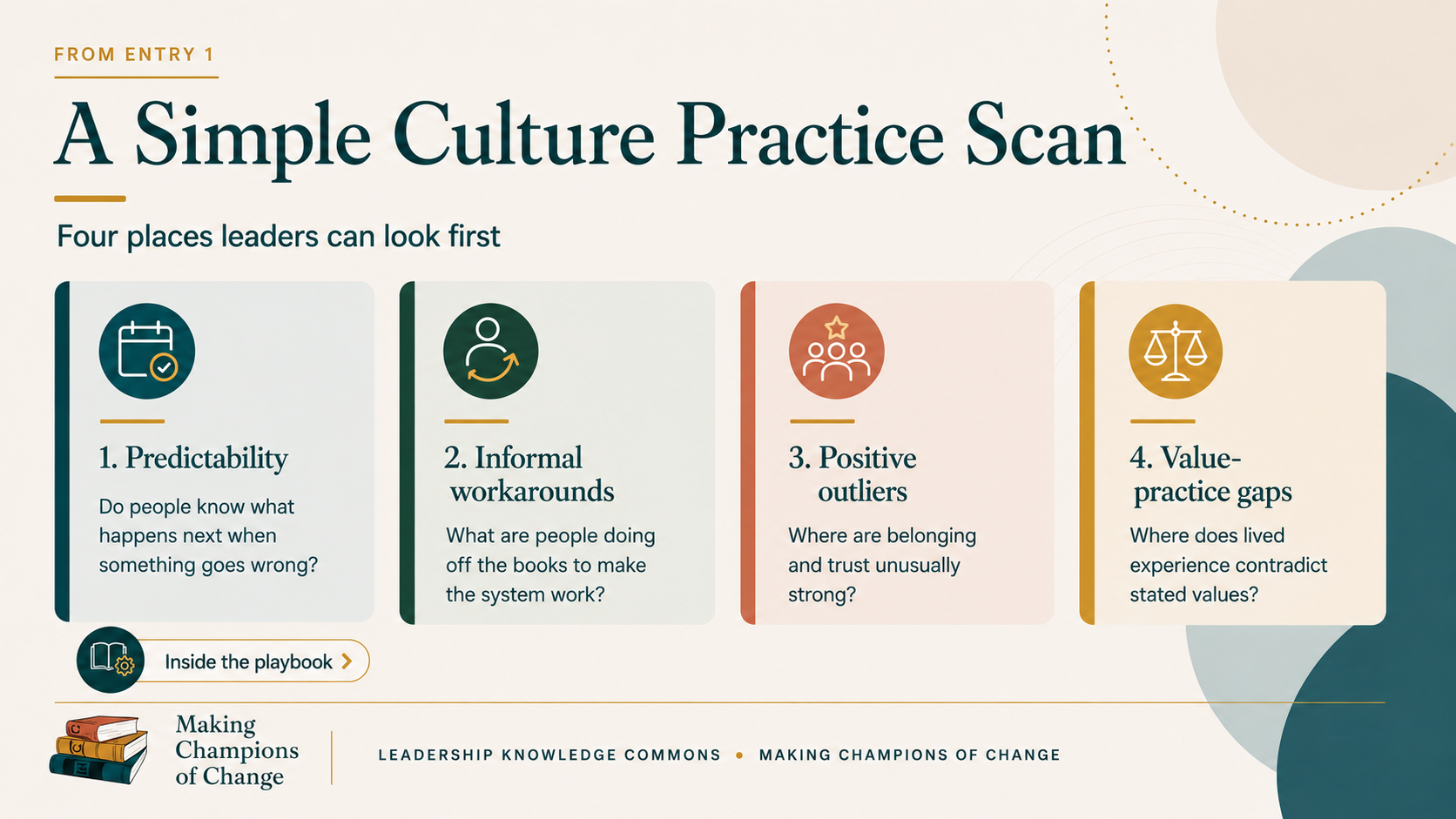
Culture Creates Outcomes
This leadership playbook helps school and district leaders examine the everyday practices shaping culture across their systems. Through four learning entries, team tools, and Reflect. Connect. Grow. worksheets, leaders learn to notice the signals embedded in routines, protect adult capacity, listen more intentionally, and strengthen shared ownership around work that needs to last.

What Multi-Tiered Systems of Supports Actually Mean
If you've spent any time in MTSS work, you know the shape by heart. Three tiers, stacked wide to narrow, colored in shades of urgency.

Conditions Before Strategy
Most leaders are not short on strategy. They have plans, priorities, and data. They have teams, professional learning days, timelines, dashboards, protocols, and clearly communicated expectations.

Practice Makes Purpose Visible
Conditions create the environment for honest engagement, and relationships help the system carry complexity. But both still have to show up somewhere people can see.
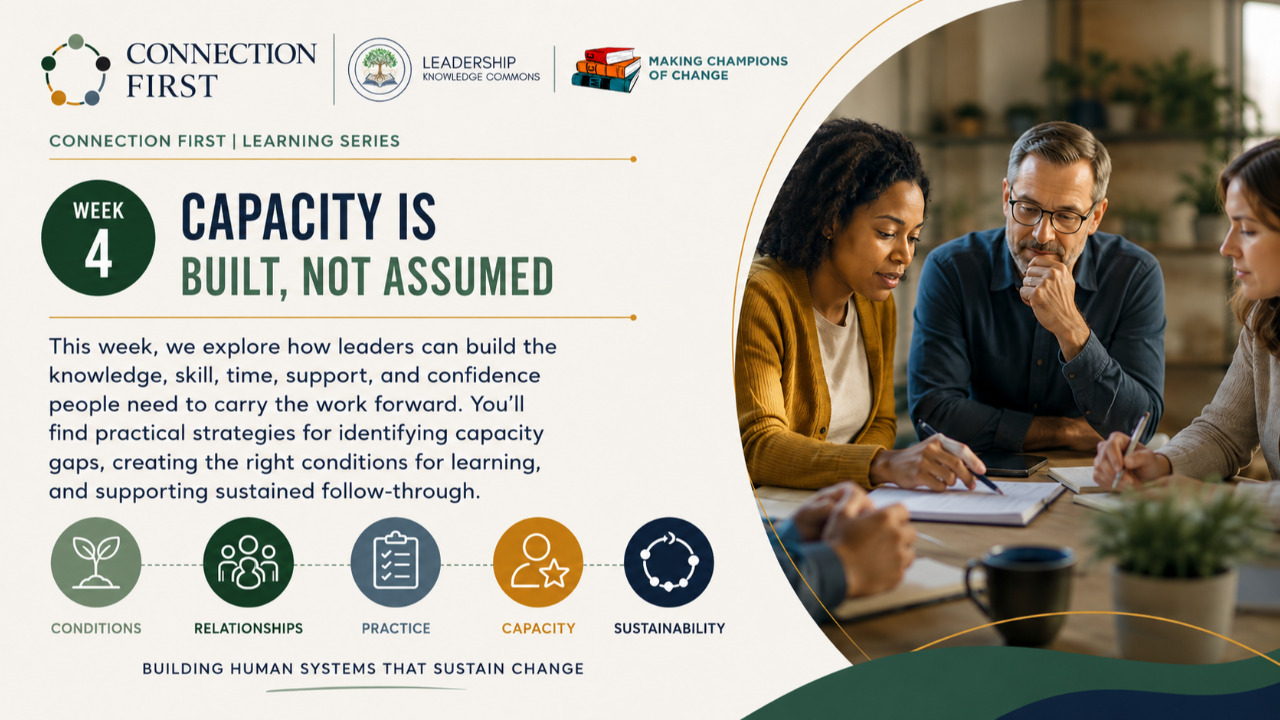
Capacity Is Built, Not Assumed
Practice makes purpose visible, but no one keeps a practice visible on willingness alone. People need the capacity to carry it when the work gets hard — and that is where implementation most often quietly stalls.
Relationships
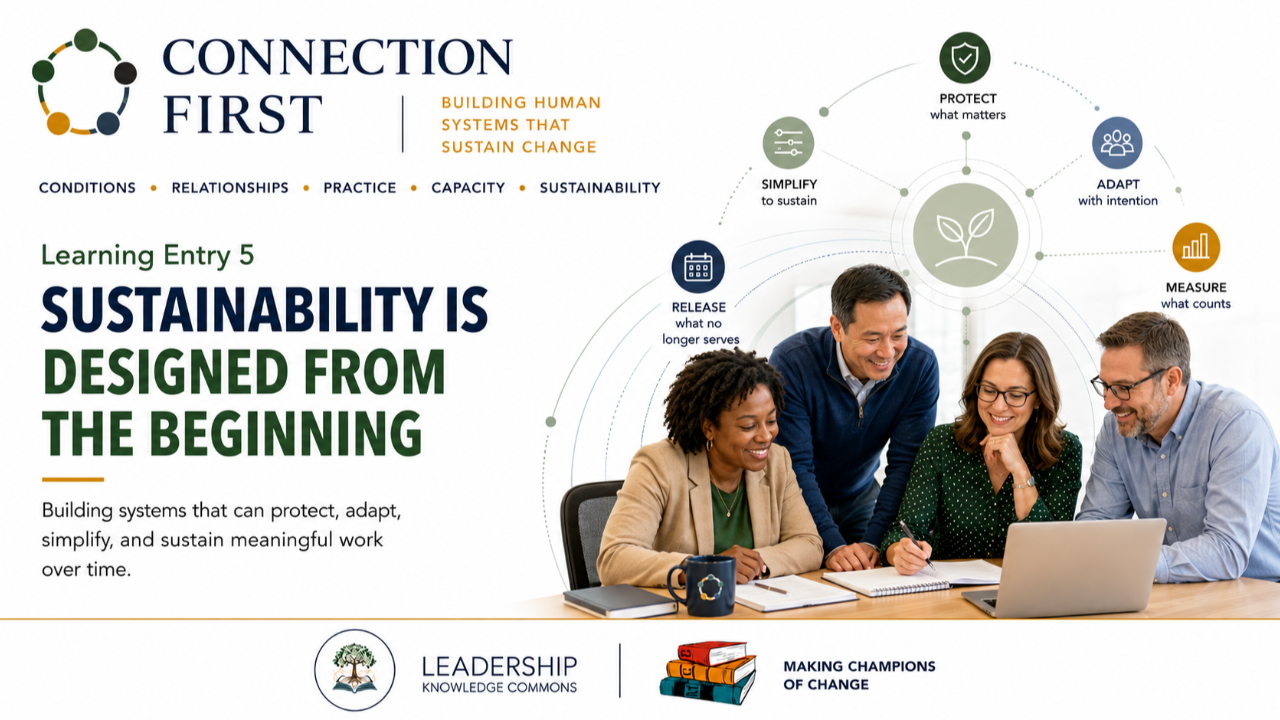
Sustainability Is Designed from the Beginning
By this point in the series, the pattern is clear: meaningful implementation does not begin with a stronger reminder, a tighter checklist, or one more meeting.
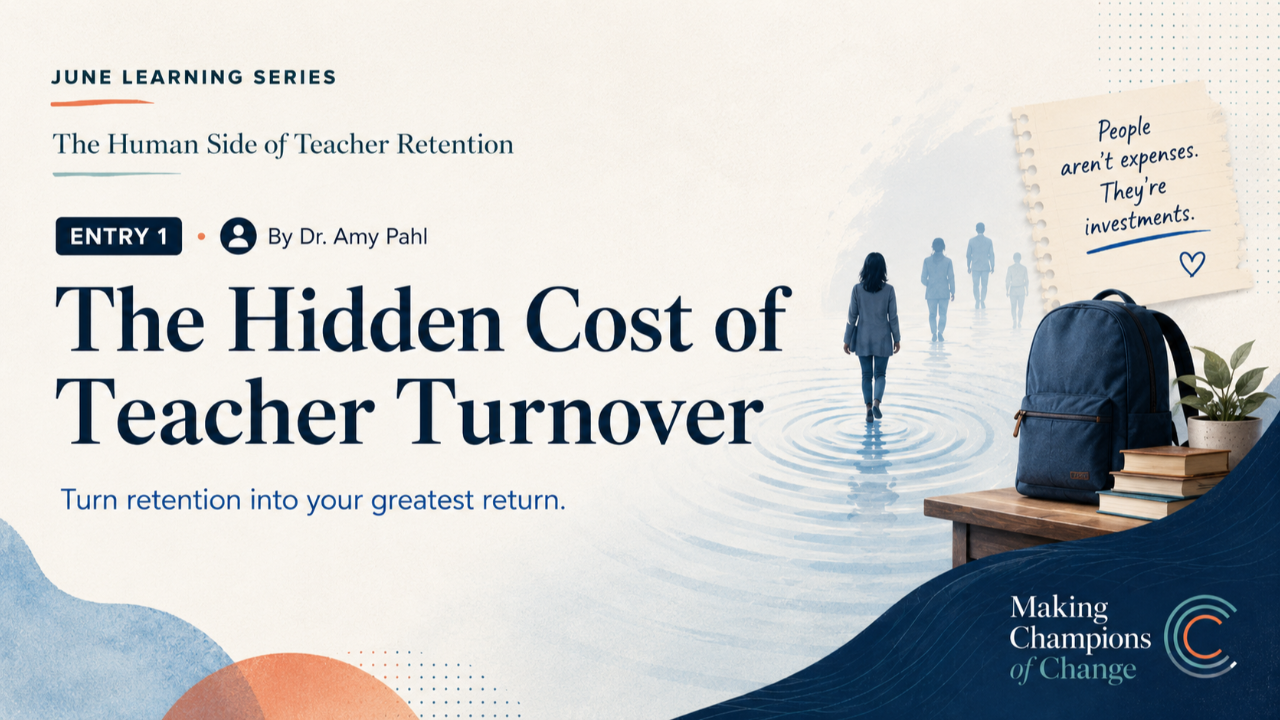
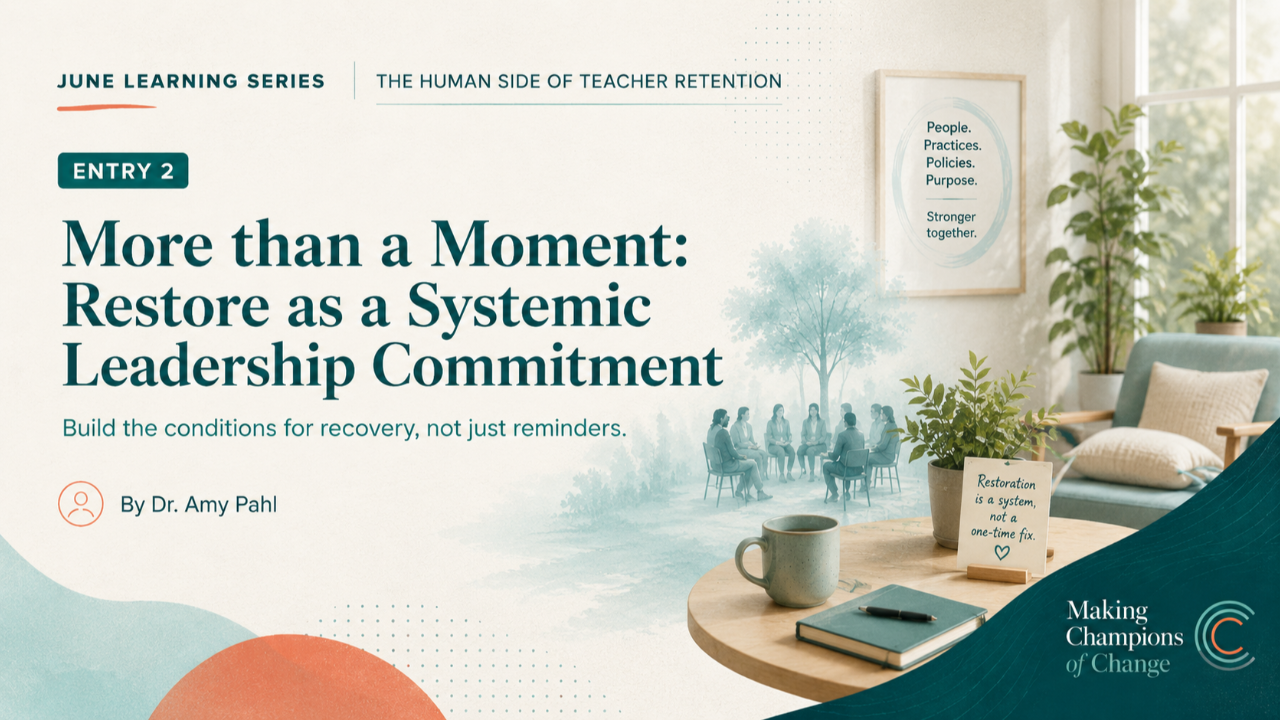
June Learning Series: The Human Side of Teacher Retention
Every spring, education leaders enter a familiar, rhythmic season of hiring: post the position, screen the candidates, host interviews, and hope the new hires stick.
June Learning Series: The Human Side of Teacher Retention
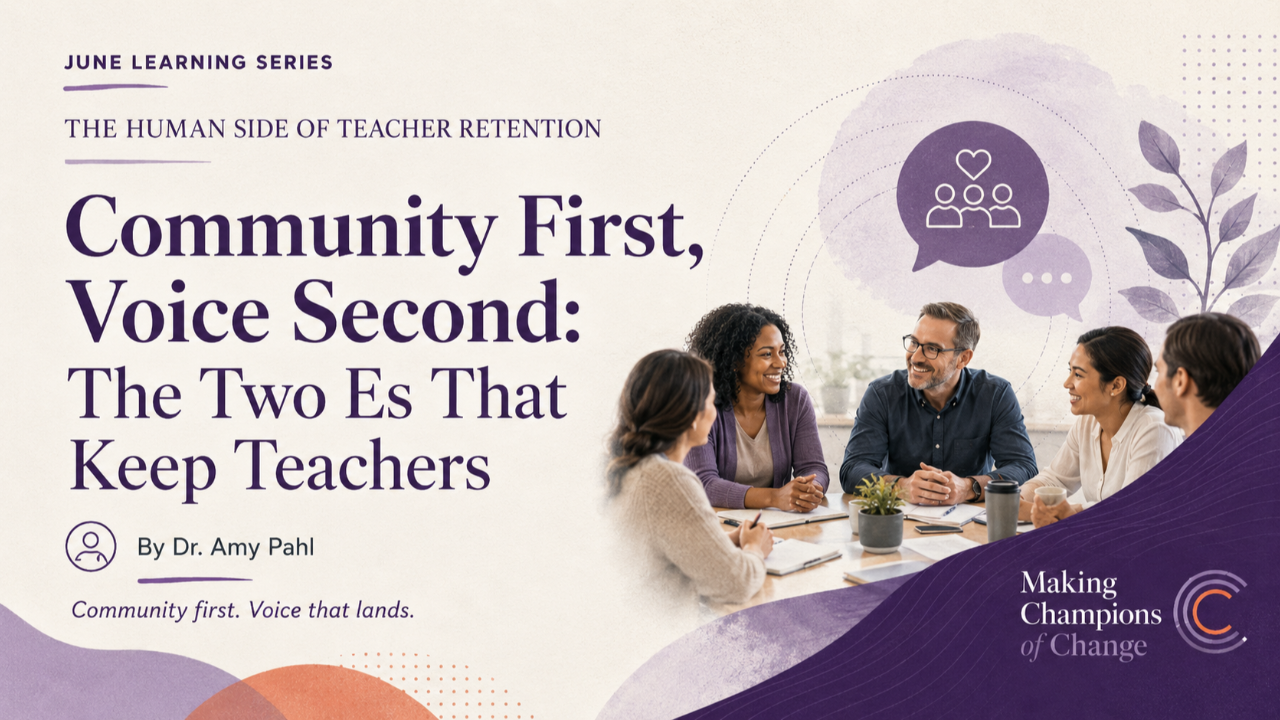
There is a belief so common in school leadership that it rarely gets examined: if we offer wellness support, we have addressed teacher wellbeing.
Relationships
June Learning Series: Entry 3
Most leaders who are losing teachers clearly care about their staff. They have planned the events, built the committees, and created the channels for feedback.
June Learning Series: Entry 4
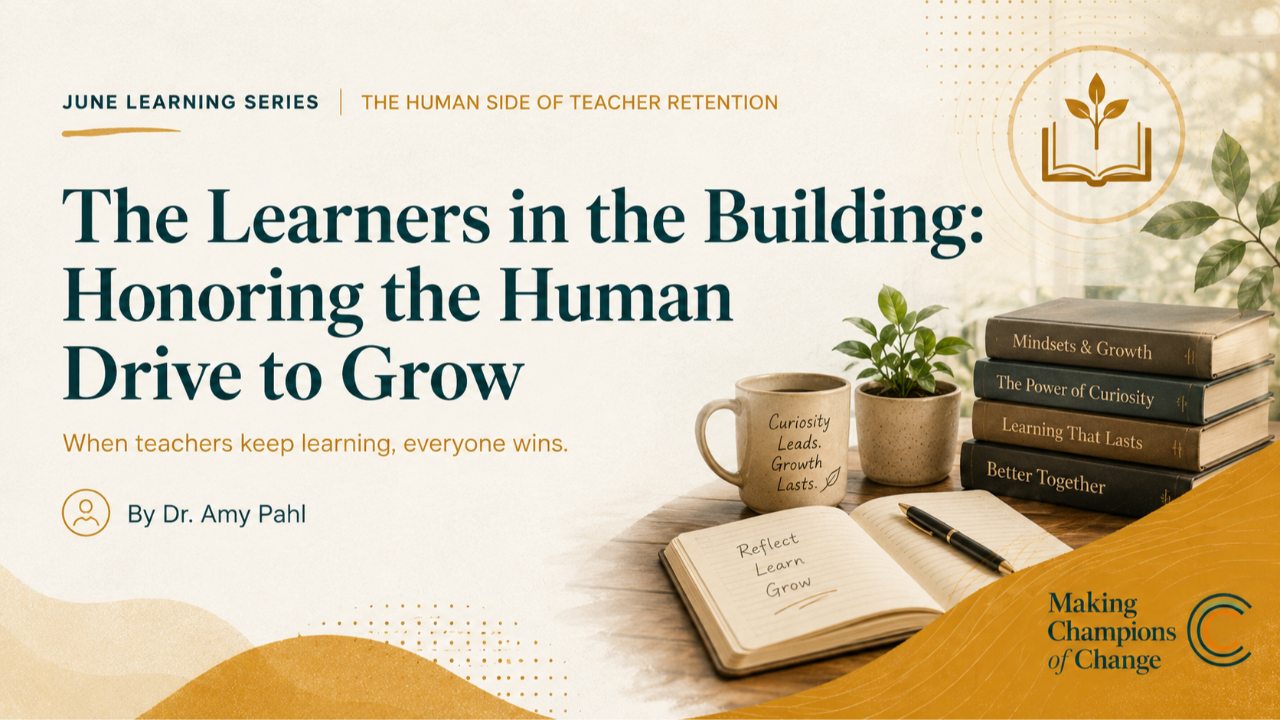
There is a belief so embedded in school culture that it rarely gets examined: learning is for students. Professional time is for work.

What Counts as Data? (It’s More Than Numbers)
When educators hear the word data, many picture spreadsheets, benchmarks, and dashboards, the kind I remember staring at late one evening...

Relationships
The Leader’s Role: Asking Better Questions
Leaders are often expected to have answers. When data surfaces, the room subtly shifts. Eyes move toward the leader. Silence lengthens and everyone waits for interpretation.

Moving from Fear to Curiosity: Data Literacy for Every Educator
Most educators can name the moment. The meeting where data was projected on a screen and the room shifted. The report that arrived without context.

Data as a Mirror: How Teams Learn to See the System
When we say data is a mirror, we’re not talking about another way to “track progress.” We’re talking about the discipline of seeing the patterns, blind...
Relationships
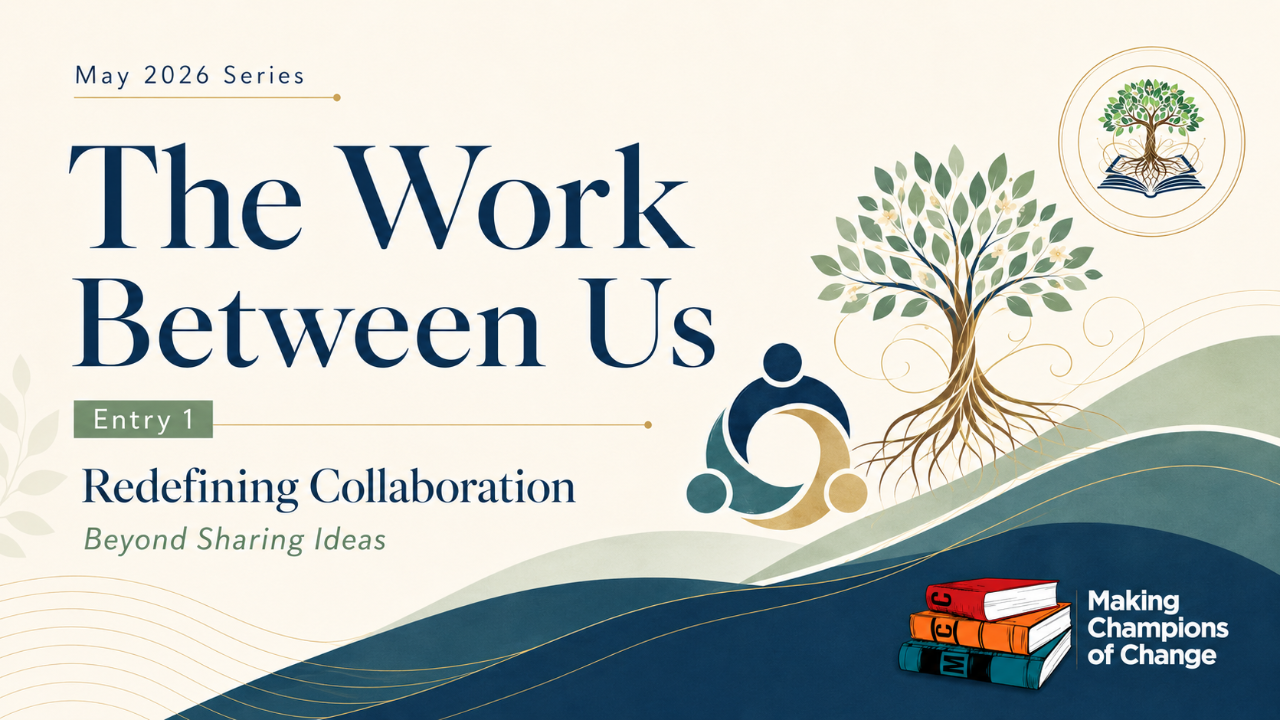
Redefining Collaboration: Beyond Sharing Ideas
Collaboration is one of the most familiar words in education and, frequently, one of the least examined. Leaders prioritize it in school improvement plans, carve out...
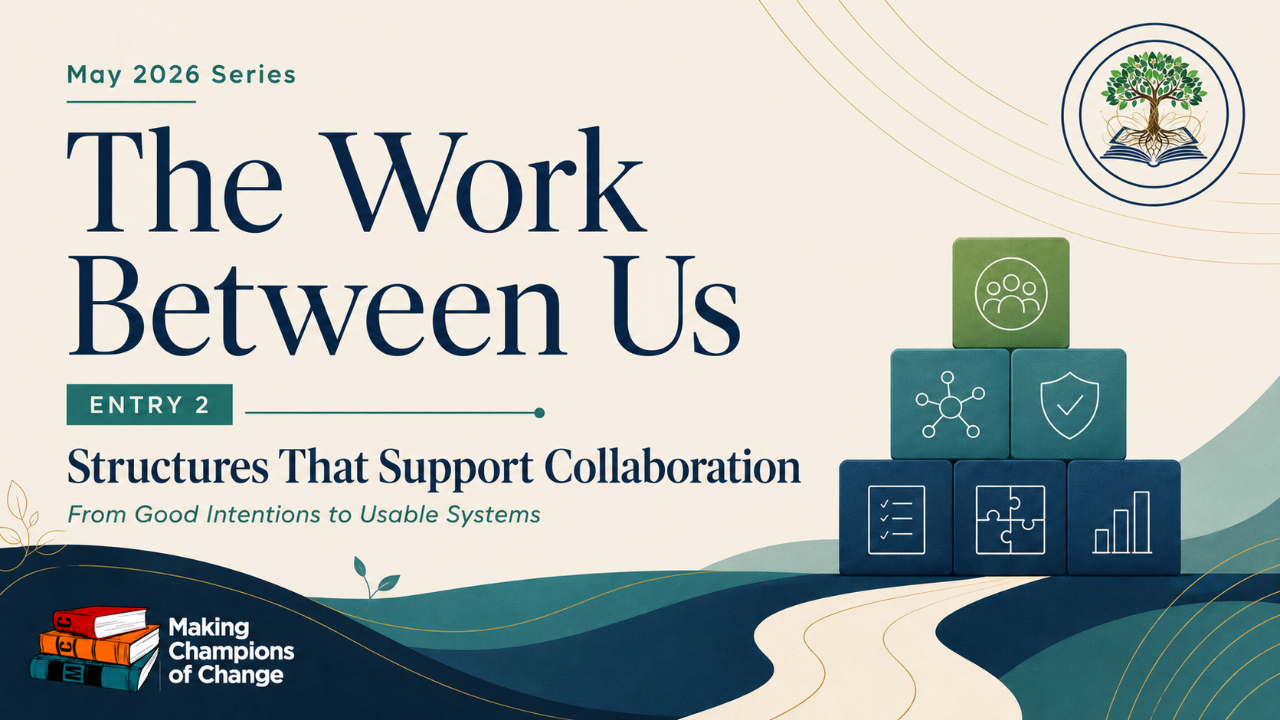
Structures That Support Collaboration
Many teams do not fail collaboration because they lack care. They fail it because care is being asked to carry what structure should have held.
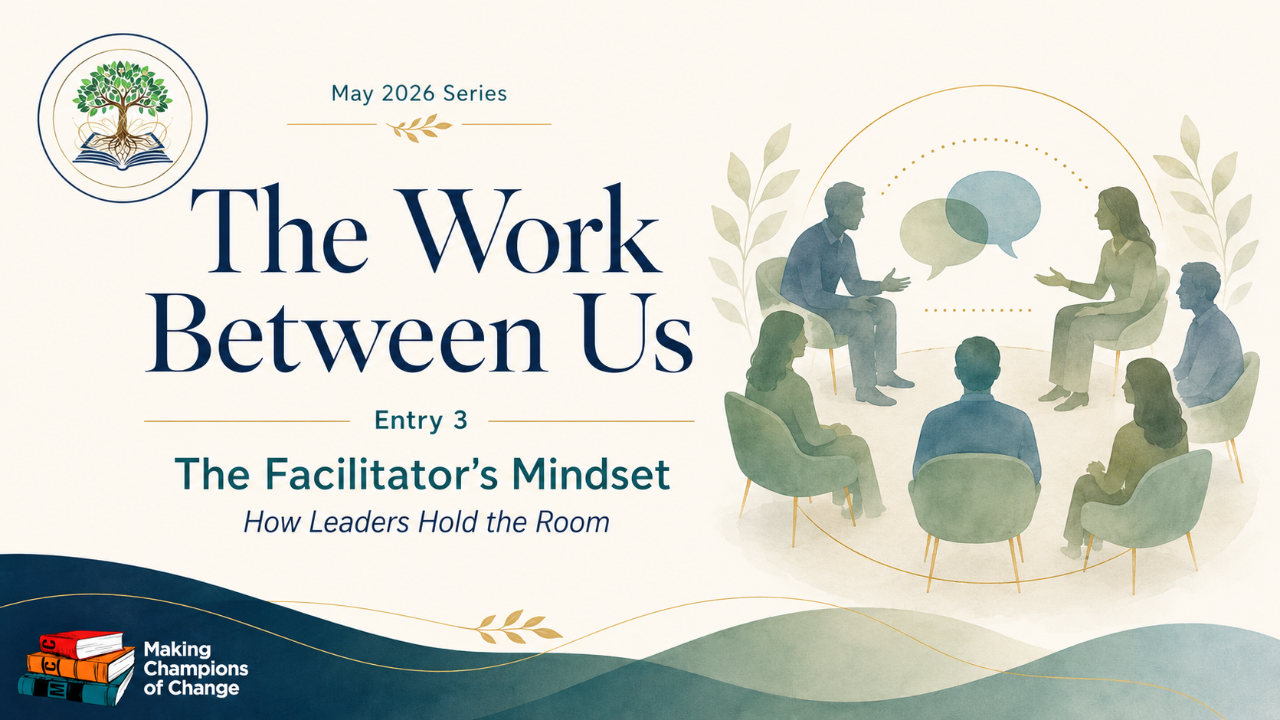
The Facilitator's Mindset: Listening as Leadership
Most collaborative rooms do not fail because people have nothing to say. They fail because the room is not being held in a way that makes speaking worth the risk.
The Facilitator's Mindset: Listening as Leadership
Most collaborative rooms do not fail because people have nothing to say. They fail because the room is not being held in a way that makes speaking worth the risk.
Join the Commons
Stay in the conversation.
Get new reflections, tools, and field learning from the Leadership Knowledge Commons. Practical insight for leaders working to sustain meaningful change.
No pressure to keep up perfectly. The Commons will be here whenever the work makes space.
Ready to go further?
When your team is ready to move real work forward, MCC partners directly with you. From a needs assessment that shows you where to start, to a Professional Learning Network, to the Leadership Laboratory, our deepest partnership, there's an entry point wherever your work is. Every partnership runs on Reflect. Connect. Grow. and strengthens the Five Pillars of Lasting Change, so the work fits your system and holds up after we step back.
Join the Commons
Free. New reflections and tools in your inbox.

A leadership and implementation ecosystem helping education leaders turn good ideas into change that lasts.
Explore
Learn with us
Opportunities
Stay in the Conversation
Get new playbooks, leadership tools, and district stories in your inbox.
© 2026 Making Champions of Change. All rights reserved.